Rio Tinto (ASX, LON: RIO) is doubling down on Argentina’s lithium market with the opening of two projects backed by a combined $1.4-billion investment, boosting its production capacity as the mining giant pursues ambitious global growth in battery metals.
The Fénix 1B expansion and Sal de Vida operation in Catamarca province both achieved first production in the second quarter of 2026, ahead of schedule, and are now ramping up output. Together, they will add 25,000 tonnes of annual lithium carbonate equivalent (LCE) capacity once fully operational, the company said.
“These two projects build on nearly three decades of lithium production in Catamarca and the expertise of our Argentine workforce,” Rio Tinto CEO Simon Trott said at an inauguration ceremony attended by President Javier Milei and Catamarca Governor Raúl Jalil. “They demonstrate our industry-leading project delivery capability, as we execute with discipline towards our global target of 200,000 tonnes lithium carbonate equivalent annual production capacity by 2028.”
The investment strengthens Argentina’s position as an emerging lithium powerhouse at a time when demand for the battery-making mineral is expected to accelerate. The country is forecast to produce about 172,700 tonnes of LCE in 2026, up 48% from last year and more than five times its 2018 output.
The expansion also comes as producers face pressure to control costs and demonstrate the commercial viability of newer extraction technologies amid volatile lithium prices.
Expanding production
The $530-million Fénix 1B expansion adds 10,000 tonnes of annual LCE capacity, increasing the operation’s total target to approximately 40,000 tonnes.
Rio Tinto is also evaluating a further expansion at Fénix that would require about $1 billion in additional investment. The proposed Fénix II lithium plant, also planned for the Hombre Muerto salt flat, could receive a final investment decision toward the end of the decade, Trott said.
“It’s under consideration; it would be the next phase of expansion,” Trott said during his visit to Argentina.
The company plans to submit Fénix II to Argentina’s RIGI in 2027, potentially securing long-term tax and regulatory benefits for the development.
Fénix began production in 1997 as Argentina’s first commercial lithium operation. Rio Tinto is already considering another expansion, with an investment decision expected in 2028 or 2029.
Sal de Vida, a new lithium carbonate operation about 20 km northeast of Fénix, has a target capacity of 15,000 tonnes annually. Its first phase involved an investment of $374 million.
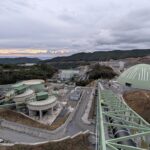
The projects form part of Rio Tinto’s integrated production hub in the Salar del Hombre Muerto, which holds a combined resource base of approximately 19 million tonnes of LCE.
Managing the operations together allows the company to share infrastructure, improve efficiencies and pursue opportunities to reduce water consumption.
Fénix uses direct lithium extraction (DLE), while Sal de Vida relies on conventional evaporation ponds. DLE can substantially shorten processing times by separating lithium from brine without relying on prolonged solar evaporation.
Rio Tinto is positioning itself among the first major miners to build a large-scale lithium business around DLE, although questions remain about its costs, scalability and long-term performance.
French miner Eramet (EPA: ERA) has also deployed the technology at its Centenario Ratones project in Salta province, where production began in late 2024.
Including Fénix, Sal de Vida and Olaroz, Rio Tinto’s nominal lithium capacity in Argentina reaches approximately 100,000 tonnes of LCE annually.
Its broader Argentinean portfolio includes a 66.5% stake in Olaroz and its full ownership of the Rincón project, spanning the provinces of Catamarca, Jujuy and Salta.
Rio is also exploring opportunities to advance copper projects in the country, but Trott said the company’s immediate priority is to safely increase production and deliver reliable, high-quality lithium to customers while generating long-term returns.
Investment incentives
The inauguration brought together national and provincial officials, employees, suppliers and representatives of local and Indigenous communities, highlighting the political and economic importance of lithium development in Argentina.
“The expansion of the Fénix project is a historic milestone that demonstrates the potential of Argentina’s mining sector,” Milei said. “This was made possible by the country once again creating incentives for the production of resources that are essential to the modern world.”
Rio Tinto expects to spend nearly 70% of its planned $4 billion in Argentinean lithium growth capital with local suppliers, potentially strengthening regional supply chains and creating opportunities for domestic businesses.
The investment aligns with Milei’s efforts to attract foreign capital through market-oriented reforms and the Large Investment Incentive Regime (RIGI), which offers tax, legal and foreign-exchange benefits for 30 years to qualifying projects worth more than $200 million.
Lithium is becoming an increasingly important contributor to Argentina’s mining exports. Shipments of the mineral generated $1.467 billion between January and August 2026, a 190.5% increase from the same period a year earlier.
Argentina forms part of South America’s Lithium Triangle alongside Bolivia and Chile, a region estimated to hold about 60% of the world’s lithium reserves. The concentration of resources has attracted international miners seeking to secure long-term supplies for electric-vehicle batteries.
Long-term demand projections are encouraging further development. Benchmark Mineral Intelligence expects global lithium demand to rise from 2 million tonnes of LCE in 2026 to 7 million tonnes by 2050, driven largely by electric vehicles and energy storage.
Argentina’s Mining Secretariat forecasts the country could overtake Chile in lithium production by 2029 and reach annual output of 573,000 tonnes of LCE by 2035.
Reaching those levels will depend on sustained investment, successful project commissioning and producers’ ability to remain competitive through commodity price cycles.
Source: https://www.mining.com/rio-tinto-pumps-1-4b-into-lithium-projects-in-argentina/