# Epiroc Hauls a Quarry to CES. Here’s What’s Actually Going On.
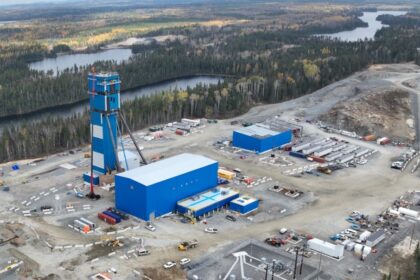
Epiroc is showing up at CES 2027 in Las Vegas this January with a gimmick that’s actually more substantive than most of what you’ll see on that floor: a live daily demonstration running a drill rig at a working quarry in Rockville, Virginia — 2,000-plus miles away — from a booth on the Vegas strip. A Luck Stone operator will sit in Booth 7031 and run a SmartROC D65 blasthole drill in real time, with show visitors watching the same video feeds and performance data the operator sees.
Here’s what this really means, beneath the trade-show theater.
**The tech isn’t new. The marketing venue is.**
Autonomous and remote-operated drilling has been deployed in mining for years. Rio Tinto ran autonomous drills across the Pilbara over a decade ago. Epiroc’s own autonomous drilling capability — rigs executing programmed hole patterns with minimal intervention — is established, revenue-generating product, not vaporware. So the honest read on this CES stunt isn’t “look what’s now possible.” It’s “look what already works, marketed to an audience that has never thought about where their gadgets come from.”
And that’s a rational bet by Epiroc. Every phone, GPU, EV battery, and data center/server rack paraded at CES sits on a foundation of mined materials — copper, lithium, cobalt, rare earths, and the unglamorous crushed stone and aggregates that build everything else. The consumer tech industry has spent twenty years pretending mining is somebody else’s dirty problem. Bringing a live quarry operation to the one place where that industry congregates is smart positioning. This isn’t the first time we’ve seen this circus — vendors hauling heavy iron to consumer shows to court relevance — but the underlying message is legitimate: the supply chain for your shiny devices starts with a hole in the ground, and increasingly that hole is drilled by software.
**What the demo actually signals for investors**
Strip away the booth theatrics and three things matter here.
First, remote operation across a continent is a solved engineering problem when connectivity holds up. Latency and network reliability at remote mine sites — often in places with thin infrastructure — remain the practical constraint, not the control systems themselves. A Virginia quarry with decent fiber is a best-case showcase. Operations in the Australian outback or the Andes are harder. Don’t extrapolate the Vegas demo to universal deployment timelines.
Second, watch the OEM-agnostic play. Epiroc is pushing Link Open Autonomy and its Common Automation Panel — frameworks meant to let equipment from different manufacturers operate under one integrated system. This is the strategic move worth your attention. Every heavy-equipment OEM wants to lock customers into its proprietary ecosystem, the way every software vendor does. A credible open standard for mixed-fleet autonomy would shift competitive dynamics across the sector and create switching costs for Epiroc as the neutral platform. Whether it stays genuinely open or quietly becomes an Epiroc-dominated standard is the question. Vendors rarely host a party without expecting to own the house.
Third, the labor angle. Luck Stone’s executive talking about associates “learning new skills” is the standard line, and it’s partly true — remote operation does move drill operators into control rooms instead of cabs, which is safer and, frankly, a better job. But be clear-eyed: automation in extraction has always reduced headcount per ton over time. The near-term story is retraining and safety gains. The decade-long story is consolidation of operating expertise into fewer hands and fewer people. Both can be good for margins and bad for labor. Investors should just not confuse the press-release framing with the structural trend.
**The macro backdrop — why any of this matters now**
Mining is in the middle of a demand supercycle narrative driven by electrification, grid buildout, and data center construction. Whether you believe the full decarbonization story or not, the physical demand for copper and critical minerals over the next fifteen years is a real, quantifiable problem — and the industry’s labor shortage is chronic. Experienced operators are retiring, and nobody’s lining up to run drill rigs in remote locations. Automation here isn’t hype-first like consumer tech; it’s necessity-first. That gives these capital investments a much firmer payback logic than, say, a chatbot subscription.
The risk side: equipment makers like Epiroc are cyclical businesses riding a commodity cycle. When mineral prices roll over and miners cut capex — and they always do — automation vendors feel it with a lag. The current tailwinds are real, but the stocks have already priced in a lot of “structural, not cyclical” optimism. I’ve sat through enough of those declarations to be skeptical. Demand for copper may be secular; mining company spending behavior is still violently cyclical.
Also note the electrification leg of Epiroc’s triad — autonomy, electrification, connectivity. Battery-electric haul trucks and rigs carry real total-cost-ofownership uncertainty: charging infrastructure at remote sites, battery life in harsh duty cycles, upfront capital. Progress is genuine, but deployment pace is slower than vendor roadmaps suggest. Treat vendor timelines with a haircut.
**Practical takeaways**
For those with exposure to the space: Epiroc-style automation revenue is a margin story tied to aftermarket software, services, and recurring connectivity — the kind of revenue stream that softens commodity cyclicality if it scales. That’s the bull case, and it’s reasonable. The bear case is slower adoption than forecast, open-standard competition, and the next capex downturn compressing it all anyway.
If you’re an investor trying to learn from this CES demo rather than be entertained by it, the signal is this: the digitization of extraction is real, deployed, and compounding — but it’s an infrastructure story measured in decades, not quarters. The companies that monetize the software layer across mixed fleets will win more than those selling the iron alone.
Las Vegas loves a spectacle. The drill rig in Virginia doesn’t care about the spectacle. It just drills holes, on schedule, with fewer people at risk. That unglamorous fact is the entire investment thesis — everything else at Booth 7031 is lighting.