Oh good, another junior exploration company found some low-grade copper and is celebrating like it’s a moon landing. Let’s do the math before anyone rushes to buy this thing.
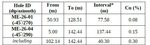
GSP Resource Corp. (GSPR.V) released assays from four holes at its Mer property in the Highland Valley Copper Camp — first drilling there in over 50 years, mostly percussion holes and one diamond drill hole back in the 1970s. Hole 1 hit anomalous copper: 0.08% over almost 78 meters beneath the historical Mer showing. Congratulations, you’ve discovered dirt.
The headline result is hole MER-26-04: 137 meters of 0.15% copper, including 40 meters of 0.30% copper, starting just 5 meters down-hole — really 2-3 meters below surface. Here’s the part that should make anyone with a spreadsheet pause: Teck’s Highland Valley Copper mine, which literally surrounds these claims, runs on reserves averaging 0.28% copper. So the headline interval is half the grade of a producing mine’s reserves, and the “high-grade” sub-interval roughly matches it. This is not a discovery announcement; it’s a “we found the same rock as the neighbor” announcement. Being within 1.5 kilometers of Alwin and surrounded by Teck — which produced over 250 million pounds of copper in 2025 — is a nice geological pedigree, but proximity to a mine is not a business model. Ask the hundreds of juniors that spent a decade near big mines and never produced anything except shareholder dilution.
CEO Dyakowski says mineralization remains open to the north. Of course it does. It always does. “Open to depth, open to strike” is the junior exploration equivalent of “this time is different.” Whether those open directions contain anything economically minable is a question that costs millions in drilling to answer.
None of this means GSP is worthless — porphyry systems do get built when they’re near existing infrastructure and mills, and Highland Valley is exactly that. But the typical retail behavior here is to buy the press release, pay the 20-30% pump premium, and hold a 90%-certain loss for a lottery ticket on the remaining 10%. Meanwhile, that same capital in a boring broad-market index fund compounds at a rate that doesn’t depend on drill cores, permitting luck, or a management team’s ability to keep the treasury alive through another financing round that dilutes you by 25%.
If you insist on speculating in juniors, size it like the lottery ticket it is — money you can set on fire without changing your FIRE date. Otherwise, someone else’s 137 meters of 0.15% copper is just a very expensive way to learn what opportunity cost means.
Source: https://www.caesarsreport.com/blog/gsp-resource-corp-announces-copper-porphyry-discovery-at-mer/