Arras Minerals (ARK.V) dropped more assays from Berezski Central, and the results are, well, mixed — which is exactly when you need math more than excitement.
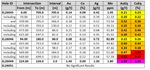
Hole EL26046 hit 338 meters at 0.44% copper-equivalent (0.17% copper, 0.24 g/t gold, plus some silver and molybdenum), including 184 meters at 0.57% CuEq. That’s a legitimate intercept. Not spectacular, but real. If you’re keeping score at home, 0.44% CuEq is a grade that could matter someday — emphasis on “someday,” because a drill intercept is not a mine, and anyone conflating the two deserves the portfolio they end up with.
Hole EL26045 is the one that requires discipline to read correctly: 705 meters of continuous mineralization from surface at a whopping 0.23% CuEq. Yes, that’s “continuous.” It’s also barely above what some producing operations milled profitably a decade ago when copper was cheap and energy costs were a rounding error. Inside that 705 meters: 230 meters at 0.39% CuEq, and within that, 86 meters at 0.46% CuEq. So the “705-meter hit” headline is really a modest-grade halo around modest-grade cores. Headline length is not value. A 705-meter interval at 0.23% is worth less per tonne than 86 meters at 0.46% — yet which one gets plastered across press releases?
Then there’s hole 049: 2 meters of 1.49% CuEq. Two meters. If your first reaction was “nice grade!”, your second should be “nice for what, exactly?” Two meters is a geological footnote, not a resource. Hole 051, drilled west of the central target to test a conductivity anomaly, returned nothing significant. That’s not a scandal — that’s how exploration works. Most holes miss. The ones pretending otherwise are selling something.
What actually improved: the two mineralized holes expanded Berezski Central to a 1,000 by 600 meter footprint with mineralization confirmed to 700 meters vertical depth. Size matters here because porphyry deposits are bulk-tonnage games — you need enormous tonnage to make low grades economic. This system is getting bigger, which is the single most important thing for a copper-gold porphyry play. Everything else is noise until someone produces an economic study.
The program: 39,000 meters drilled, 5,000 to go, four rigs, wrapping in December. Lab turnaround times are improving, so expect a steady drip of assays for the next 3-4 months. Translation: the hype cycle is being refilled on schedule. Watch whether future grades hold up as holes step out from the core, because step-out holes are where porphyry stories either compound or die.
Now the part everyone skims: the author holds a small long position and Arras sponsors the website. Sponsor. As in, they pay the outlet covering them. I’m not saying the analysis is dishonest — I’m saying you should price that incentive into every adjective you read, including mine if I were being paid. Junior mining speculation is a negative-sum arena where you lose your entire investment if things go wrong, and “things” go wrong far more often than promoter PowerPoint slides suggest.
If this is your retirement plan, do me a favor: calculate what 30 years of maxing a boring low-cost index fund does at historical returns, then compare it to the expected value of a junior explorer with no resource estimate, no economic study, and a sponsor-financed newsletter coverage loop. The arithmetic is not close. Speculate with money you can burn, size it like you expect to lose it, and let compounding do the heavy lifting elsewhere.
The deposit keeps getting bigger; your position size shouldn’t.