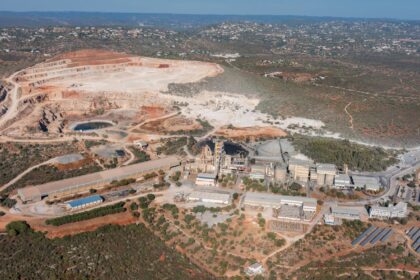
Blasting at the central and ventilation portals for the Groundrush Exploration Decline is done at the Central Tanami Project Joint Venture in the Northern Territory. Tanami Gold and MGX Resources each hold 50% of the JV, which is targeting a development decision in 2027. That’s the news. Here’s what this really means.
First, some context on what’s actually happening in the ground. The portals were built under an initial works package within a A$38 million ($26 million) contract with Macmahon Underground, signed at the end of August 2026. The contract covers portal and ventilation establishment plus the first 3.5 km of decline development to roughly 350 m depth over 14 months. The decline exists for one purpose: underground access for 33,000 m of infill drilling into Groundrush, aimed at converting over 400,000 oz of inferred resources into the indicated category.
Now, let’s talk about what’s real and what’s marketing. A blasted portal is a hole in the dirt. It’s necessary work, and blowing it up on schedule is fine — but companies announce these milestones because they need headlines between the capital raises and the feasibility studies. I’ve watched juniors string investors along with “key milestones” for decades. A decline is a means to an end, not a mine. The end here is the drill program, and the drill program is a means to a development decision, which is still two years out. That’s a lot of runway for things to go sideways.
The resource itself deserves scrutiny. The CTPJV’s JORC 2012 total is 31 Mt at 2.8 g/t for 2.8 Moz, with Groundrush holding 11 Mt at 3.3 g/t for 1.2 Moz. Those are respectable numbers on paper — 3.3 g/t is a grade that can work in this cost environment, particularly if gold holds anywhere near current levels. But here’s the part the press release glosses over: over 400,000 oz of that is sitting in the inferred category. Inferred means the company believes it’s there but can’t yet prove continuity well enough to design a mine around it. This entire decline-and-drill exercise is about converting that confidence level. Until the drills say otherwise, that 400,000 oz is a hypothesis, not an asset.
And the conversion rate matters. Juniors routinely trumpet “conversion potential” and then deliver 60-70% of what the inferred numbers suggested, sometimes less, sometimes at thinner widths or lower grades than the model hoped. The market prices in the headline ounces; the drill results rarely cooperate fully. Discount accordingly.
The logistics picture is worth noting too. Tanami is remote — a long way from Darwin, with the cost structures that implies. Power, water, haulage, workforce — in the Territory, none of it is cheap, and everything gets more expensive when you least expect it. A 2.8 g/t resource can carry those costs if gold cooperates and the mine plan is disciplined. It cannot carry them if capex blows out and the grade falls short. The economics here have a narrower margin for error than the marketing materials suggest.
On the capital side: A$38 million buys portals and 3.5 km of decline. The eventual mine will require multiples of that — processing plant, tailings, site infrastructure, working capital. Neither Tanami nor MGX is a deep-pocketed major, and a 50/50 JV means neither partner can unilaterally drag the other into full funding. JV deadlocks over capital calls are one of the oldest failure modes in this business. Watch for how the partners fund the next phase — dilution, farm-outs, or debt all tell you something about confidence.
The 2027 development decision date is the number to hold them accountable to. Any slippage — and there is almost always slippage — pushes out cash flow and usually means another raise at a worse price. If you’re in this name, mark your calendar and watch the drilling results that come out of the infill program in the latter stages of decline construction. Those results are the real de-risking event, not the portal blasting.
On gold itself: the macro backdrop is the friendliest it’s been in years, and that’s doing a lot of heavy lifting here. Central banks buying, real rates uncertain, monetary authorities debasing their currencies at a steady clip — real assets are where you want to be when that’s the regime. But do not confuse a gold price tailwind with a company’s execution ability. I’ve seen plenty of promising deposits die under favorable gold prices because the operators couldn’t manage a drill program, let alone a build. The metal being strong doesn’t make every paper ounce bankable.
The executive director called the portal work a key milestone. Fine. It is a milestone — a small, early, reversible one. The scoreboard that matters reads: resource conversion percentage, funding secured, permits in hand, and a decision date that holds. Everything before that is groundwork, and groundwork gets overhyped because there’s not much else to announce.
If you’re an experienced investor, none of this changes your thesis today. If you’re newer to the space, understand the sequence: portal, decline, drilling, resource upgrade, study, funding, decision, construction, production. Each step takes longer and costs more than the last plan says. The JV is at step two of eight. That’s genuine progress in a sector where many never get past step one — but progress is not a promise, and a hole in the ground, no matter how well blasted, isn’t ounces in the bank. The drills will tell the truth starting in the back half of that 14-month window. Wait for them, and let the headline writers have their fun in the meantime.