Paraguay’s emerging mining industry faces fresh political uncertainty after President Santiago Peña resigned Thursday amid a banking crisis, raising questions about the future of US-backed investments in the country’s largely untapped titanium and uranium resources.
Peña stepped down after the collapse of Ueno Bank, a major digital lender linked to his government, triggered widespread protests, froze millions of depositors’ savings and cost him the support of the long-ruling Colorado Party.
Minutes after his announcement, the lower house voted 78-0 to impeach him, sending the charges to the Senate. Lawmakers also moved to consider his resignation, opening a path for Vice-President Pedro Alliana to assume power without a Senate trial.
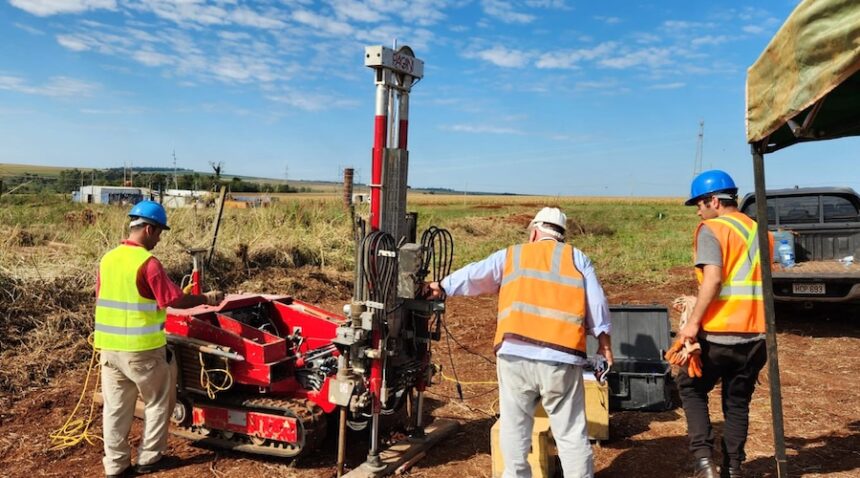
The upheaval comes as Paraguay seeks to transform its modest mining industry into a destination for foreign investment, particularly in minerals considered strategically important to the US. The leadership change introduces uncertainty over the implementation of recently announced bilateral agreements and the investment climate for exploration companies.
US minerals push
Paraguay has strengthened its minerals relationship with Washington this year, signing a memorandum of understanding on critical minerals followed by an agreement on civilian nuclear cooperation in August.
The diplomatic push continued in October when US Deputy Secretary of State Christopher Landau visited Paraguay with a trade delegation. The visit included announcements of new investments in uranium development and energy infrastructure, signalling growing US interest in the country’s mineral potential.
Among the companies with a foothold in Paraguay is Uranium Energy Corp (NYSE-AM: UEC), which owns the Alto Paraná titanium project in the country’s east.
The project hosts an inferred resource of 3.58 billion tonnes grading 7.31% titanium dioxide (TiO₂), alongside an indicated resource of 70 million tonnes grading 7.6% TiO₂, according to the company’s technical disclosures.
A preliminary economic assessment outlined a base-case after-tax net present value of $419 million, using an 8% discount rate, and an internal rate of return of 21%. The proposed operation would produce high-titanium slag and high-purity pig iron, with access to nearby hydroelectric power potentially reducing operating costs and emissions.
Víctor Fernández, president of the Paraguayan Chamber of Mining (CAPAMI), described the country as a relatively unexplored mining frontier in an October interview with Global Americans.
Fernández, who also serves as UEC’s Paraguay country head, identified the Yuty and Coronel Oviedo uranium projects, alongside Alto Paraná, as significant developments in the country’s mining pipeline.
He said uranium, rare earth elements, nickel, niobium and gold are among the minerals that warrant further exploration, while lithium and platinum-group elements may also be present in favourable geological settings.
Investment challenges
Despite its geological potential, Paraguay remains a minor mining jurisdiction compared with established South American producers such as Chile, Peru and Argentina.
Fernández said the country needs regulatory reforms to translate geological discoveries into commercial production, particularly by simplifying permitting and improving legal certainty for investors.
A new mining code is being drafted to improve the investment climate. CAPAMI has advocated longer exploration periods, royalties based on profits and legal guarantees designed to support projects throughout their operating lives.
The country has considerable deficiencies in geological information, as only approximately 4% of its territory has been mapped in detail. This lack of detailed mapping restricts the information available to companies that are evaluating potential mineral deposits.
Gold mining is concentrated mainly in the Paso Yobai district of Guairá department, where artisanal and small-scale operations provide employment and income. The sector also faces environmental and public health challenges, including the use of toxic substances in mineral processing.
Paraguay has sought to attract exploration capital through a relatively low corporate tax rate and investment incentives, while its extensive waterways offer access to international markets.
The Paraguay and Paraná rivers connect the landlocked country to Atlantic ports, providing potential export routes for future mineral production.
Another advantage is its electricity supply, generated almost entirely from renewable sources, principally the Itaipú and Yacyretá hydroelectric dams. Access to low-emissions power could appeal to companies developing energy-intensive mineral processing operations.
Still, the country’s limited mining infrastructure, early-stage exploration sector and lack of an established large-scale production history present challenges independent of the political crisis.
The ongoing political crisis adds a further consideration for investors assessing long-term projects that require stable regulations, sustained financing and government support.
There is no indication of halted existing mining developments or suspended agreements with Washington. However, the transition leaves the incoming administration responsible for maintaining those relationships while restoring confidence in the country’s financial and political institutions.
Latin America has emerged as a focal point in a growing global power struggle, primarily driven by the competition for control over critical minerals and their associated supply chains. MINING.COM has tracked this year the geopolitical forces reshaping the region and why markets are increasingly driven by global alliances as much as local politics.
Other countries in the series:
Source: https://www.mining.com/paraguay-crisis-threatens-emerging-uranium-ambitions/