PLS handed out a contract. That’s the actual news here — everything else is corporate press release seasoning. But don’t dismiss it entirely. Sometimes the boring items tell you more about a company’s trajectory than the flashy ones.
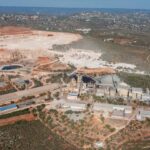
The deal: Bugarrba PJV Pty Ltd and SRG Global Infrastructure won the contract to upgrade roughly 14.6 km of private access road linking the Great Northern Highway to PLS’s Pilgangoora operation in Western Australia’s Pilbara. Sealing, drainage, the works — designed to keep trucks moving through the wet season, which in the Pilbara can shut a site down faster than a margin call.
Here’s what this really means: a lithium producer is spending real money on haulage reliability. That’s not glamorous, but it’s the kind of unsexy capex that shows up in cost-per-tonne curves later. The road upgrade supports larger truck configurations — more product per movement, fewer trips, lower unit costs. When you’re chasing volume in a commodity where the marginal producer gets culled every downturn, logistics efficiency is survival. Miners that starve infrastructure during expansion phases pay for it doubly when throughput ramps.
The broader context is where the real story sits. This road is one slice of up to A$650 million ($451 million) in infrastructure spend at Pilgangoora, approved in October 2026 alongside the A$1.9 billion P2000 Expansion Project — PLS’s push toward 2 million tonnes per year of spodumene production capacity. That’s a big bet. And I’d be lying if I said lithium hasn’t burned a lot of portfolios in the last few years. Prices went on a euphoric run, everyone and their cousin announced a project, then the market did what markets do — oversupply arrived, prices collapsed, and the weaker names got hammered. PLS surviving that shakeout and greenlighting expansion says something about its balance sheet and cost position. Whether 2 Mt/y of capacity finds a home at prices that justify it is the open question. China’s lithium supply keeps growing, and every forecast of a demand shortfall has a way of being met by new supply nobody modeled.
There’s a social license angle too, and unlike most ESG boilerplate, this one has some substance. Bugarrba is a majority Nyamal-owned joint venture, and Pilgangoora sits on Nyamal and Kariyarra Country. PLS CEO Dale Henderson framed the contract as building on the company’s relationship with the Nyamal People — employment, business growth, economic participation on Country. Bugarrba Director Jessica Wilson talked about building civil capability that carries into future maintenance work, not just a one-off contract. SRG Global’s David Macgeorge made the same pitch: Indigenous participation through commercially viable businesses, not charity.
Skeptical? You should be — I’ve watched a hundred companies dress up procurement requirements as philanthropy. But structurally, this isn’t the worst version of it. A majority-Indigenous JV taking a real construction contract with an experienced partner (SRG) alongside is a better model than a donation or a Training Fund nobody can audit. Whether it compounds into durable capability for Bugarrba or fades after the ribbon-cutting is something only time will show. The 105 construction jobs and skills transfer — plant operation, materials handling, civil works — are the kind of transferable trades that actually hold value in the Pilbara, so the bones are decent.
Construction kicked off October 2026, completion targeted July 2027. Nine months for a road upgrade sounds tight but plausible for that distance in that terrain — weather permitting. In the Pilbara, the wet season eats schedules for breakfast, which is precisely why they’re building the drainage in the first place. Circular reasoning, but that’s infrastructure planning for you.
The Western Australian Government chipped in A$11 million for the public-side intersection upgrade at Great Northern Highway and Wodgina Road. Small money by mining standards, but every dollar of shared infrastructure lowers PLS’s total burden. Take the help where you can get it.
What should an investor actually take from this release? Three things. First, PLS is executing — contracts awarded, work started, timelines published. Execution risk in mega-projects is where timelines blow out and budgets triple, so any evidence of disciplined progress matters. Second, the P2000 expansion is a bet on lithium demand being real and durable through the late 2020s. If EV adoption in the West and Chinese grid storage keep compounding, PLS will be sitting on scale that smaller producers can’t match. If demand disappoints, that A$1.9 billion becomes a millstone. You’re being asked to trust management’s read on a market that’s whipsawed everyone for a decade. Third, the infrastructure and community spend — the road, the JV, the jobs — is the cost of doing business in the modern Pilbara. Companies that treat social license as an afterthought get blockaded; companies that buy in early tend to run smoother. It’s not charity, it’s risk management with a press release attached.
Nothing here changes my fundamental view on lithium as an investment: it remains a vicious, cyclical, politically complicated market dressed up as a growth story. But PLS is one of the names with the balance sheet and cost structure to survive the cycles, and boring, competent infrastructure spending is exactly what you want to see from a company planning to be here in twenty years. Just don’t confuse a road contract with a thesis. Watch the spodumene price and the P2000 ramp, not the asphalt.