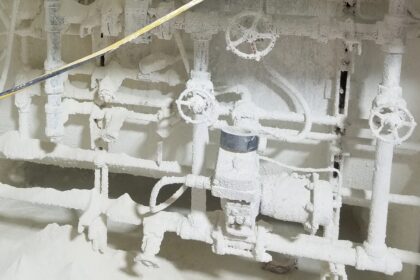
TAKRAF Group closed its acquisition of FSI FILTRACIÓN SL on November 3, 2026 — a Madrid-based engineering firm that has spent 35-plus years in liquid/solid separation, with over 300 chamber and membrane filter press installations to its name. Here’s what this really means: a German-headquartered heavy equipment group is quietly buying up filtration capability, and that tells you something about where the smart money in mining services is headed.
Let’s skip the press-release poetry. This is a bolt-on acquisition, not a transformational one. FSI isn’t going to move TAKRAF’s needle. What it does is fill a gap. TAKRAF’s DELKOR brand already handles large-scale filter presses for mining and tailings dewatering — the big, capital-intensive stuff. FSI operates in the mid-market: plate sizes up to 1.8 by 1.8 meters, process engineering, sizing, installation, commissioning, and the after-sale support that actually keeps customers loyal. Complementary, in other words. The corporate-speak in the announcement is standard fare — “broader range of customer requirements,” “significant potential to develop our offering together.” I’ve read a thousand of these. The real question is whether the integration sticks.
It probably will, and here’s why. FSI’s management team stays put. Luca Romanengo, currently Director of Strategic Projects at TAKRAF, steps in as Managing Director. Eduardo Moretón remains on FSI’s board. Existing customers keep their contacts. That’s the playbook you want to see in an industrial acquisition — the acquirer keeps the relationships and the institutional knowledge intact rather than gutting the target for synergies and watching the customer base evaporate. Most buyers get this wrong. TAKRAF at least appears to have read the manual.
Now, the macro backdrop deserves some attention, because it’s the part the press release won’t spell out. Tailings management has become a growth category for a reason. Since Brumadinho in 2019, regulators and insurers have been hammering miners on dam safety, and dry-stack tailings — which require exactly the dewatering and filtration technology DELKOR and FSI sell — have gone from niche to expected practice in many jurisdictions. Water scarcity in Chile, Peru, Australia, and the American Southwest is doing the rest. Every ounce of copper and lithium the energy transition demands has to come out of increasingly arid ground. Filtration and water recovery equipment is the unglamorous plumbing of that buildout. This isn’t the first time we’ve seen consolidation chase a secular tailwind, and usually the acquirer who buys capability early — rather than paying spot prices for revenue later — comes out ahead.
The skeptical take: mid-market industrial rollups in Europe carry integration risk that never shows up in the announcement. Spanish labor costs, currency exposure, and the difficulty of cross-selling into DELKOR’s mining customer base are all real friction points. A 35-year-old family-built reputation in Iberian industrial filtration doesn’t automatically translate into orders in the Pilbara or the Atacama. The “international network” argument cuts both ways — FSI gets reach, but reach without localized service is just a sales brochure. TAKRAF will need to invest in FSI’s service footprint, not just extract its order book.
From an investor’s seat, none of this is directly actionable — TAKRAF sits inside the Tenova/TechnipFMC-adjacent industrial ecosystem and doesn’t file a standalone ticker. But the trend is the tell. Equipment makers and engineering firms tied to dewatering, water treatment, and tailings compliance are consolidating because demand is durable and regulation-driven. Regulation-driven demand doesn’t evaporate when commodity prices dip, which is more than you can say for most mining-adjacent revenue. If you’re screening for exposure to the water-and-waste theme in resources, the filtration and dewatering names — and the strategic acquirers consolidating them — are where the boring, compounding business lives.
For FSI’s customers, the near-term picture is reassuring: continuity is the stated priority, the leadership remains, and the technology set only broadens. For TAKRAF, this is a patient, sensible purchase of niche engineering at what one assumes was a rational price — exactly the kind of acquisition that doesn’t make headlines but quietly builds enterprise value. In a sector addicted to hype cycles, boring is a feature, not a bug.