# David Rosenberg’s Bear Necessities: A Rare Voice of Sanity in a Bull Market asylum
It takes a certain fortitude to be a permabear in Canada — not because the position is intellectually indefensible, but because being right early is indistinguishable from being wrong in the eyes of a financial media complex that treats every equity market high-water mark as a birthright. David Rosenberg, the veteran economist and founder of Rosenberg Research, has spent a career being early, and his new book, *Bear in the Bullring: How Independent Thinking Protects Your Money & Improves Your Life*, is essentially a formal apology — not for his views, but for the industry’s allergy to them.
Rosenberg’s core thesis is unfashionably simple: independent thinking is the only durable edge in markets. This should be a platitude, yet it functions as heresy in an ecosystem where sell-side strategists huddle around consensus estimates like campers around the last warm fire. The book is part memoir, part investment philosophy, and part indictment — a career-spanning argument that the crowd is not merely occasionally wrong, but structurally incentivized to be wrong at the worst possible moments.
## The Higher-for-Longer Mirage
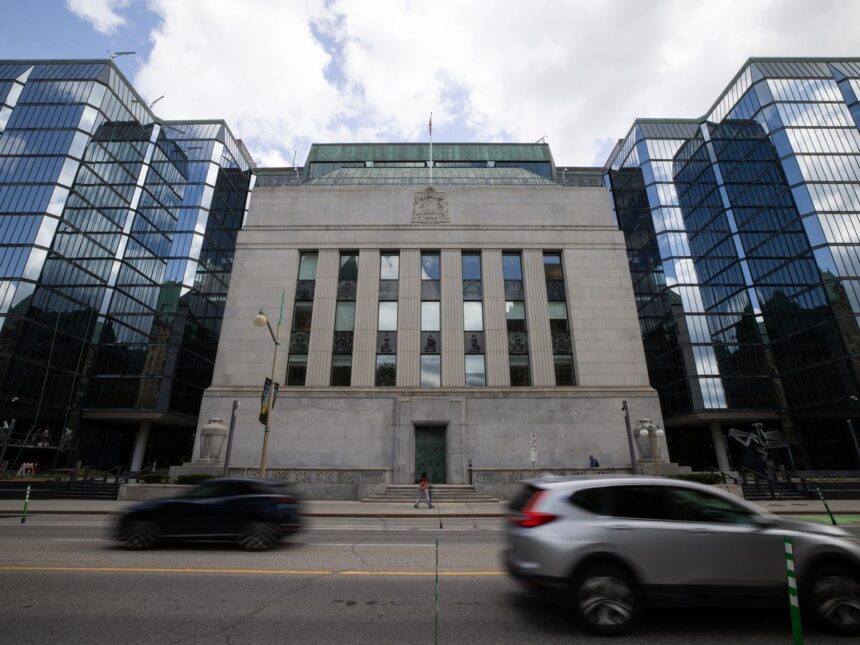
Consider the current Canadian macro backdrop, which Rosenberg views with characteristic suspicion. The consensus — and I use that word with all the affection it deserves — has spent two years assuring us that rates would normalize back to the pre-2022 fantasy world of free money. Bank of Canada officials, having engineered one of the aggressive tightening cycles in a generation, then pivoted to signaling relief, and markets lapped it up like it was divine revelation. related coverage in these pages has made the counterargument plainly: Canadians need to get used to higher rates, and anyone pricing in a swift return to zero-cost leverage is engaging in nostalgia, not analysis.
The data support the skeptics. Canadian households carry the highest debt loads in the G7 relative to income — roughly 175% of disposable income, a figure that would have triggered alarm bells in any era not dominated by recency bias. The idea that monetary policy could return to emergency settings without reigniting the very inflation the Bank spent two years extinguishing is not a forecast; it’s a wish. And yet the bond market, the equity market, and the residential real estate complex have all been trading on that wish for months.
Rosenberg’s point — honed through decades at Merrill Lynch, Gluskin Sheff, and now his own shop — is that this is precisely how cycles end badly. Not with a bang of obvious mispricing, but with a slow accumulation of consensus comfort. The 1970s taught us that inflation regimes, once broken, do not politely return to baseline; they reassert themselves whenever fiscal profligacy and monetary accommodation reappear. Post-pandemic deficits across the Western world remain at wartime levels. Anyone who believes central banks can simply resume the 2010s playbook of quantitative easing without consequence should explain, slowly and in detail, why this time differs.
## The Bull Market Nobody Paid For
Rosenberg’s skepticism extends, naturally, to the equity rally itself. And here the contrarian case has teeth. The current bull market in equities — like nearly every broad advance of the past fifteen years — is narrow, multiple-expansion-driven, and increasingly dependent on an artificial-intelligence capex narrative that has yet to prove it generates returns commensurate with the hundreds of billions being poured into data centers and GPUs. We have seen this film. The fiber-optic buildout of the late 1990s also involved a genuinely transformative technology. It also vaporized roughly $2 trillion of shareholder capital before the transformative part showed up — in someone else’s hands, a decade later.
The concentration statistics are the tell. When a handful of mega-caps account for a third or more of index gains, the “market” is not confirming a broad economic expansion; it is a leveraged bet on seven corporate balance sheets and a capex arms race. Genuinely durable bull markets — the 1980s, the 2009-to-2020 stretch — were built on expanding breadth, falling long-end yields, and multiple decades of disinflation. Two of those three pillars are now structurally compromised. The third is being actively dismantled by tariff policy and deglobalization, yet the multiple sits near historic highs. You don’t need to be a bear to notice the arithmetic. You just need to not be paid to ignore it.
## The Bank of Canada’s Difficult Position
Domestically, the policy dilemma Rosenberg highlights is genuinely uncomfortable, and the mainstream treatment of it borders on malpractice-by-omission. The Bank of Canada has cut rates into an economy where shelter inflation — the largest single component of CPI — remains stubborn, where federal and provincial deficits are running hot and fiscal policy is doing the opposite of what monetary restraint requires. Governor Tiff Macklem’s institution is effectively fighting its own government’s fiscal expansion, and history is unkind to central banks placed in that position. Arthur Burns at the Fed in the 1970s is the canonical cautionary tale: accommodate the political cycle, and inflation decouples for a decade.
As Douglas Porter of BMO has noted, the Bank rarely hikes just once — and by extension, rarely achieves a smooth soft landing from a tightening cycle of this magnitude. The historical record on soft landings is roughly the financial equivalent of sighting a snow leopard: much discussed, rarely documented, usually misidentified. Yet every easing cycle is sold to the public as the exception. Canada’s economy is more rate-sensitive than America’s — shorter mortgage terms, higher household leverage, a housing market that functions as both the banking system’s collateral base and the household sector’s retirement plan. That sensitivity cuts both ways. The same mechanism that made tightening bite hard will make easing reflate housing speculation with alarming speed, putting the Bank back on the inflation-fighting defensive within quarters.
## Independent Thinking as Capital Preservation
What redeems Rosenberg’s work from mere doom-mongering — and what his book is actually about — is the constructive implication of contrarianism. Being a bear is not a personality; it’s a discipline. The practical upshot for investors is portfolio construction that assumes the consensus is wrong somewhere, you just don’t know where yet: genuine diversification across duration, geography, and asset classes; skepticism of momentum dressed up as fundamentals; and a willingness to hold assets that look silly at cocktail parties but perform in drawdowns — gold, quality bonds, cash yielding actual returns.
This is, not coincidentally, advice that would have saved investors from 2000, 2008, and arguably from today’s concentration risk. It is also advice that no commission-generating sales force has any incentive to give you, which is precisely why it must be self-administered. The bullring rewards the crowd until, abruptly, it tramples it.
Rosenberg’s career demonstrates the cost of this discipline: years of ridicule during melt-ups, followed by quiet vindication during busts. The market has a way of making the patient look foolish right up until it makes the impatient look destitute. For investors whose time horizon extends beyond the next FOMC meeting, that trade — temporary social discomfort in exchange for capital preservation — remains the best one available.
Source: https://financialpost.com/news/economy/the-bank-of-canada-will-regret-its-recent-rate-hike-rosenberg