Rio Tinto (NYSE, LSE, ASX: RIO) has marked the opening of two lithium projects in Argentina backed by about $1.4 billion (C$2 billion) in combined investment, adding capacity as it expands its battery metals business.
The Fénix 1B expansion and Sal de Vida operation in Catamarca province achieved first production in the second quarter ahead of schedule and are ramping up output, the company disclosed Thursday. Together, they will add 25,000 tonnes of annual lithium carbonate equivalent (LCE) capacity once fully operational.
“These two projects build on nearly three decades of lithium production in Catamarca and the expertise of our Argentine workforce,” CEO Simon Trott said in a release. President Javier Milei and Catamarca Governor Raúl Jalil attended the inauguration.
The early production starts haven’t ensured a smooth ramp-up. In its Oct. 14 operating review, Rio reported slower-than-expected progress at Sal de Vida because of equipment availability. The company expected annual lithium output at the low end of its 61,000-to-64,000-tonne LCE guidance range, mainly because of that delay.
Rio is targeting global annual capacity of 200,000 tonnes LCE by 2028.
Expanding production
Fénix 1B adds 10,000 tonnes of annual LCE capacity, increasing the operation’s total target to about 40,000 tonnes.
Rio is evaluating a further expansion at Fénix that would require about $1 billion in additional investment. A final investment decision on the proposed Fénix II plant at the Hombre Muerto salt flat could come towards the end of the decade, Trott told Reuters.
The company plans to submit Fénix II next year to Argentina’s Large Investment Incentive Regime (RIGI), which offers long-term tax and regulatory benefits, according to the news agency.
Fénix began production in 1997 as Argentina’s first commercial lithium operation.
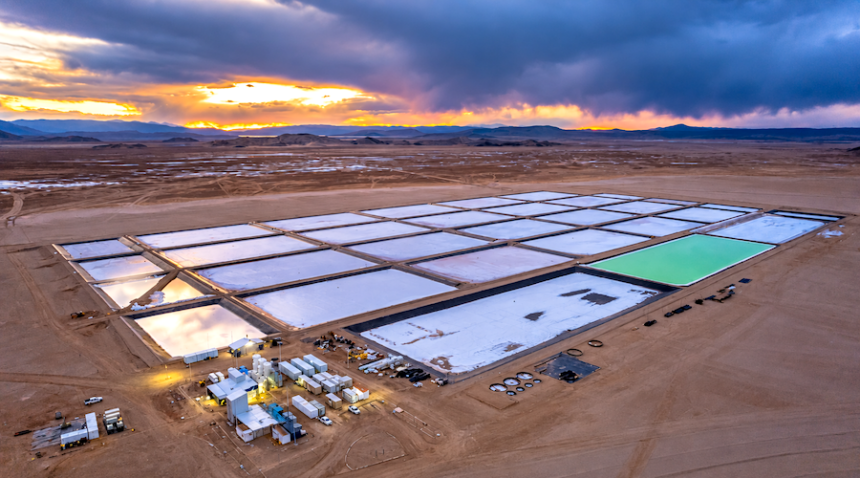
Sal de Vida, a new lithium carbonate operation about 20 km northeast of Fénix, has a target annual capacity of 15,000 tonnes LCE.
Rio inherited both operations through its March 2025 acquisition of Arcadium Lithium.
Fénix uses direct lithium extraction (DLE), while Sal de Vida relies on conventional evaporation ponds. DLE separates lithium from brine without prolonged solar concentration.
France’s Eramet (ENX: ERA) also deployed DLE at its Centenario-Ratones operation in Salta province, where first lithium carbonate production was achieved in December 2024.
Fénix, Sal de Vida and Olaroz have combined target capacity of 97,500 tonnes LCE annually on a whole-operation basis, before adjusting for Rio’s ownership interests.
Rio’s Argentine portfolio includes a 66.5% stake in Olaroz in Jujuy and full ownership of Rincón in Salta, alongside its Catamarca operations.
The company is also exploring opportunities to advance copper projects in Argentina, Trott told Reuters.
Investment incentives
“The expansion of the Fénix project is a historic milestone that demonstrates the potential of Argentina’s mining sector,” Milei said in Rio’s release. “This was made possible by the country once again creating incentives for the production of resources that are essential to the modern world.”
Rio expects to spend about 70% of its planned $4 billion in Argentine lithium growth capital with local suppliers.
RIGI provides 30-year fiscal and regulatory stability for qualifying projects, with a general minimum investment of $200 million.
Argentina’s lithium exports generated $1.62 billion in the first nine months of this year, up 173% from a year earlier, according to the Mining Secretariat’s October export report. Export volumes increased 45% over the same period.
Argentina, Bolivia and Chile form South America’s Lithium Triangle, a region with large lithium-bearing brine deposits.
Benchmark Mineral Intelligence is forecasting that global lithium demand will rise from 2.11 million tonnes LCE this year to about 7 million tonnes by 2050, led by electric vehicles and energy storage.
Argentina’s Mining Secretariat projects the country could overtake Chile in lithium production around 2029 and reach about 573,000 tonnes LCE annually by 2035.
Rio’s Rincón expansion is targeting first production in 2028, followed by a three-year ramp-up towards 60,000 tonnes of annual capacity.
Source: www.northernminer.com — article syndicated from the publisher’s feed; all rights remain with the original publisher.