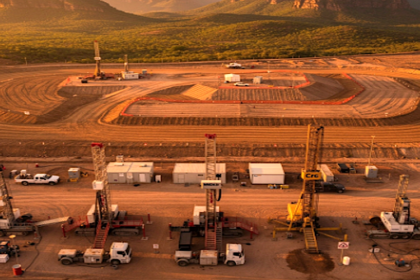
Look, a conference press release isn’t normally something I’d spend a minute on, let alone a thousand words. But MINEXCHANGE matters more than most people trading mining stocks from a laptop realize, so let me tell you what’s actually going on here and why you should pay attention.
From February 28 to March 3, 2027, the Society for Mining, Metallurgy & Exploration holds its annual conference at the Colorado Convention Center in Denver. On the surface, it’s the industry’s biggest annual meet-up: over 725 exhibiting companies, the largest Expo Hall in the event’s history, more than 100 technical sessions, student competitions, award dinners, the whole works. Here’s what this really means: it’s the one week a year where the operators, engineers, suppliers, and capital allocators in mining are all in the same building. If you want a read on where the real money and real problems are in this sector — not the newsletter hype — you go where these people gather.
Now, the organizers will tell you the technical program is unmatched in depth and breadth. That’s marketing copy, and I’ve read enough of it to smell it through the page. But buried in the agenda is something genuinely telling. The new cross-cutting sessions cover four topics: AI, robotics, and automation; critical minerals; water management and treatment; and underground ventilation.
Four topics. Read them again, because they’re a map of where the industry’s capital is actually flowing.
Critical minerals first, since that’s the one every retail investor thinks they understand. This isn’t the first time we’ve seen this circus — back in the rare earth mania of 2010-2011, half a dozen companies promised to break China’s stranglehold, raised billions, and delivered approximately nothing. Lithium in 2022 was the same movie with a different cast. The difference now is that government money — IRA subsidies, DoD offtake deals, export controls — has turned critical minerals from a trade into policy. That makes the theme more durable than the last cycles, but durable doesn’t mean every junior with a drill rig and a press release is investable. When conference organizers give a whole track to critical minerals, it means the demand is real. It also means the crowd chasing it is enormous, and the easy money has usually already been made by the time everyone’s presenting slides about it.
Second, AI and automation on the expo floor. I’ve watched enough tech cycles to be allergic to the word “AI” in any corporate presentation. But in mining, automation is less hype and more survival. Autonomous haul trucks, remote drilling, predictive maintenance — these aren’t futuristic concepts anymore, they’re the difference between a margin and no margin at a low-grade operation. Labor shortages in mining are chronic and getting worse; nobody’s enlisting in the underground workforce anymore when they can drive a forklift in a warehouse with air conditioning. The companies deploying automation effectively are quietly expanding margins while the market fixates on spot copper prices. That’s the kind of boring operational edge I like.
Third, water management. This one tells you where the real constraints are. Ask anyone who’s tried to permit a mine in Chile, Peru, or Arizona in the last decade — water is the fight. Communities, regulators, and courts increasingly treat water access as the gating issue, not grade or metallurgy. A track on water treatment at the industry’s flagship conference means operators see the same thing I do: the bottleneck isn’t geology anymore, it’s social license and hydrology. If you’re evaluating a developer-stage project, this should be on your checklist before anything else. A world-class deposit with no water permit is a lottery ticket, not an asset.
Underground ventilation is the least glamorous item on the list, which is exactly why it deserves a mention. Ventilation-on-demand and airflow optimization are pure cost-and-safety plays. Deep mines run into heat and air quality limits that cap production regardless of commodity prices. Innovation here is unsexy and directly accretive — my favorite combination.
Beyond the technical sessions, the event includes a keynote series, breakfast and luncheon speakers, a Spotlight Session Series debuting in the Expo Hall starting with the Robert E. Murray Innovation Award Lecture, 13 short courses offering professional development hours, field trips to regional mining sites, the SME Foundation Gala, and — worth noting — the Colorado Mining Association’s Western Mining Summit co-located at the same venue. That co-location matters. It means the policy and regulatory crowd, the people who actually shape permitting outcomes in the American West, will be in the same hallway as the operators. In a year when American critical minerals policy is being rewritten in real time, that overlap is where deals and alignments get made.
Here’s the honest caveat, and I’ll give it to you straight because nobody in the promotional material will. A conference of this size is also a festival of sponsors, and when you read coverage of it — including from outlets that are media sponsors, as International Mining is here — understand the incentive structure. Every exhibitor has stock to promote or equipment to sell. Every “groundbreaking session” was branded that way by someone with a stake. I’m not cynical about the value of the gathering itself; I’m skeptical about taking investment direction from anything said at a podium with a sponsor banner behind it.
So what’s the practical takeaway for someone with capital at stake? Three things. First, watch what the operators ask about in Q&A and what the suppliers are selling — the expo floor tells you where operating budgets are going before it shows up in quarterly capex reports. Second, treat the critical minerals enthusiasm as confirmation of a real trend, not a buy signal. The best entries in thematic cycles come when the conferences are half-empty, not sold out. Third, if you’re serious about the sector, the short courses and technical sessions are where the actual substance lives — geology, metallurgy, project economics — not the keynotes. The people who do the work understand the difference. The people who lose money usually don’t.
Denver, late February. If you can’t make it, at least read the proceedings after the fact and skip the press releases. The truth in this industry is always in the technical papers, never in the gala dinner speeches.