



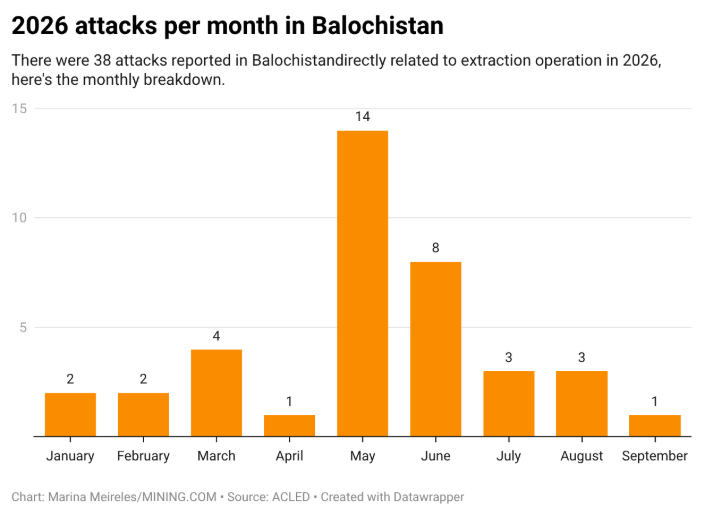
More than 30 mining operations have been attacked in Pakistan’s resource-rich Balochistan province in 2026, raising security risks as the country seeks investment to develop some of the world’s largest undeveloped copper-gold deposits.
Balochistan recorded 38 attacks connected with extractive operations between January and September, bringing the total over the past three years to more than 130, according to data from the Armed Conflict Location & Event Data (ACLED) report.
“This risks undermining Pakistan’s drive to attract international investment and develop its mineral sector amid the global scramble for critical minerals,” Pooja George, South Asia assistant research manager at ACLED, said.
Balochistan is a region swarmed by conflict between separatists and the government especially around extraction of copper, gold, chromite, coal and natural gas. For separatists, extraction equals exploitation of the country’s wealth, causing them to target operations for what they signify.
The attacks make it more difficult for Pakistan to leverage its untapped mineral and fossil fuel wealth, as well as find safety solutions for all parties involved in the conflicts.
Transport targeted
Balochistan has reported over 130 attacks in the last three years directly connected with extractive operations, with 38 being just between January and September 2026.
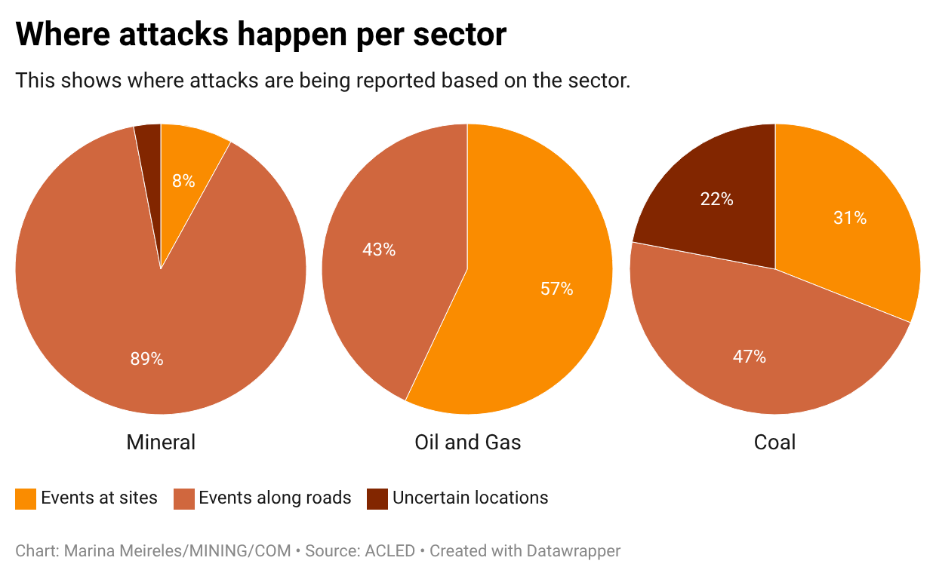
Attacks on mineral projects occur predominantly during transportation, where militants can bypass the heavier security surrounding mine sites, according to ACLED.
Flagship projects such as the Reko Diq copper mine and Saindak copper-gold mine involve foreign partners and receive protection from private and state security forces.
Public-owned oil and gas operations face a different pattern. More than half of the attacks against those operations take place on extraction sites, a result of less security when compared to mineral projects. Coal operations have experienced most of its attacks during transportation and about a third on site.
Nature of conflicts
With less than 17% of attacks involving roadside bombs or landmines, ACLED suggests that the purpose of attacks is to disrupt operations by creating an insatiable atmosphere, rather than harming workers and civilians.
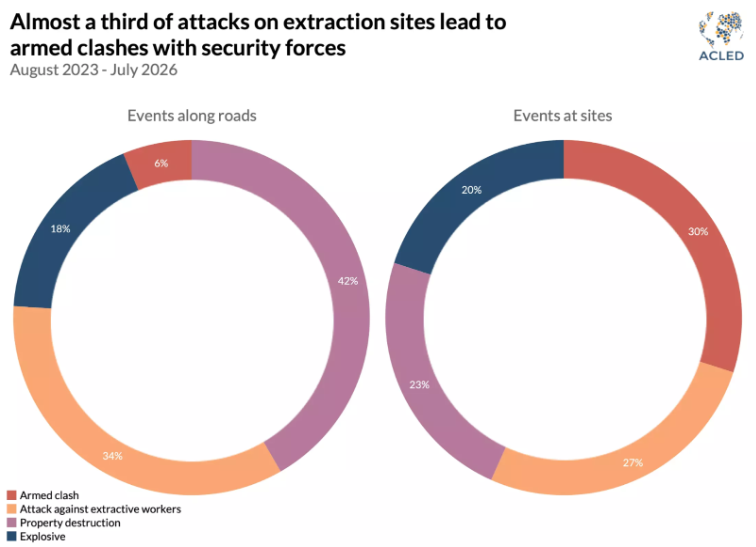
Nearly 90% of separatist attacks against mineral projects happen on roads. Gunmen typically fire at vehicle tires to disable trucks and sometimes set the vehicles ablaze after allowing drivers to leave, according to ACLED.
“Most attacks impacting mining involve property destruction rather than fatalities. The aim appears to be disruption: creating and amplifying a sense of instability around mining operations and making the environment increasingly difficult for companies to operate in,” George said.
Militants have also increased roadblocks and checkpoints in the region to facilitate attacks, aiming to show how the state’s authority has decreased and that fear is spreading especially along remote areas. ACLED data show that the number of such events in 2026 is on track to surpass 2025 levels.
Attacks on extractions sites can carry greater human costs because militants are more likely to encounter security forces, increasing the potential for lethal clashes.
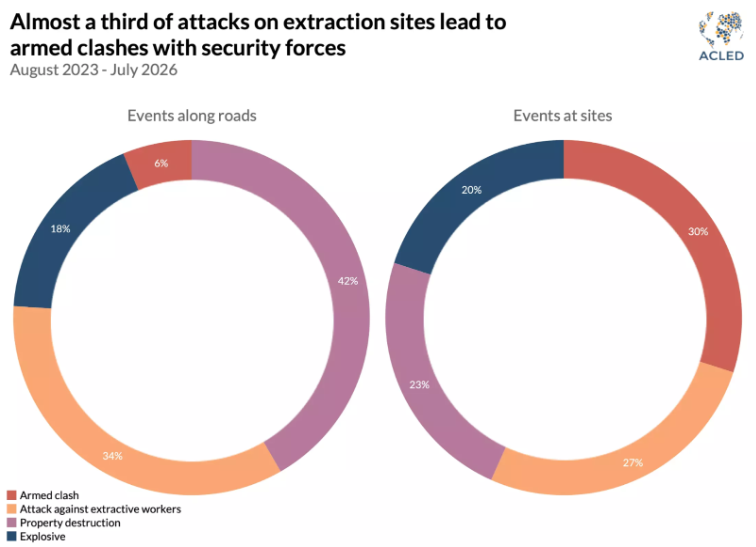
Operations workers and companies have felt this increase in instability, with privately-owned mining operations warning for shutdowns or slower operations and workers going on strike.
Impact in Pakistan’s mining future
The stakes are rising as Pakistan courts international investment to develop Balochistan’s largely untapped mineral wealth.
Lack of well-developed and secured transportation infrastructure and the need for state security bring more risks to foreign investors, as separatists are more likely to attack their operations as the government is their biggest adversary.
ACLED also adds that another risk that comes with increased security, is the abuse of those forces, that can carry reputational costs for companies and impact local community engagement, which is key to safe operations.
Continued attacks could also draw more international attention to the separatist insurgence, giving militants a larger platform while potentially exposing them to a stronger state crackdown.
Pakistan has deployed additional security forces to Balochistan, but ACLED argues security measures alone are unlikely to resolve a conflict rooted partly in political disputes over resources, autonomy and the distribution of economic benefits.
“Opposition to resource extraction lies at the heart of the Baloch separatist insurgency, meaning attacks may escalate further as Pakistan seeks to leverage its untapped mineral wealth,” George said.
Source: https://www.mining.com/attacks-on-mining-operations-on-the-rise-in-pakistan-report/