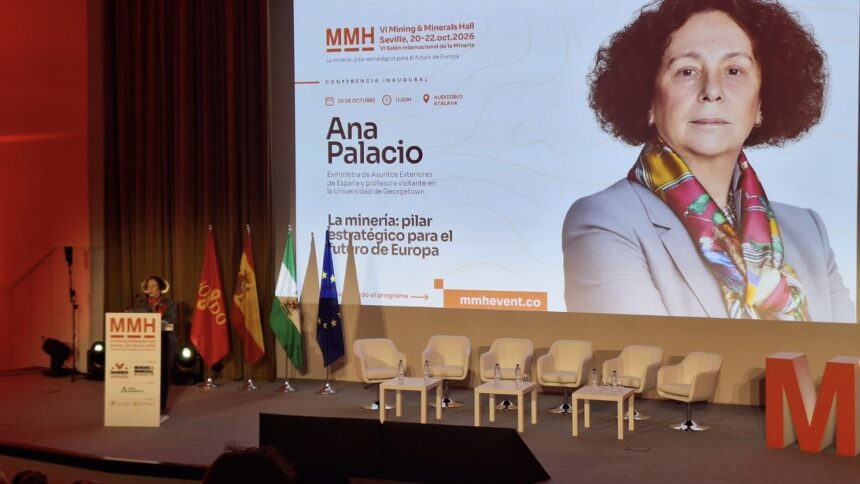
One of the clearest arguments for learning from U.S. President Donald Trump’s mining policy came recently from a former Spanish foreign minister in Seville. Ana Palacio urged Europe to study Washington’s tax credits and purchase guarantees. Governments that want strategic mineral production, she argued, must help make it commercially possible.
Canada might want to listen. It should also distinguish the useful part of the American approach from the uncertainty that accompanies it. Sharing investment risk can help build a mine. Trade disputes make governments and once-trusted allies harder to rely on.
That tension runs through Trump’s mining policy. His administration deserves credit for recognizing that supply security costs money. The question is whether its interventions will create an enduring industrial base, and whether partners can depend on the rules governing their participation.
Washington’s deal with MP Materials illustrates the opportunity. Announced in July 2025, the Pentagon agreement established a 10-year floor of $110 per kg for the company’s neodymium-praseodymium products and purchase assurances for magnets from a planned factory. Those commitments address revenue risk, something a faster permit alone cannot fix.
Transparency
There is a legitimate public interest in paying for supply capacity that markets might otherwise leave concentrated elsewhere. But public support needs transparent terms, measurable obligations and a return for taxpayers. Strategic importance cannot become an exemption from commercial scrutiny.
Nor does domestic support cancel the damage of unpredictable trade policy. Washington exempted critical minerals from its July tariffs on Canadian goods, but separate duties on steel, aluminum and copper products show the limits of that protection. The wider message to investors is that access to an allied market can become a bargaining instrument in disputes far removed from a deposit’s economics.
Spain offers a useful comparison, though hardly a finished model. At the Mining and Minerals Hall conference in October, the recurring demand was for rules and investment commitments that last long enough to carry a project into production.
“Mining needs stability,” Palacio said. “We need big pacts, big agreements where everybody commits.”
Developers in Seville described trying to coordinate financing, equipment orders and recruitment while approval schedules remain uncertain. Spain’s proposed national exploration program envisages €197 million (C$311.5 million) in public and private investment, but public funding depends on annual appropriations. Better geological information will help; companies still need to know when they can use it.
In Andalusia, regional industry minister Jorge Paradela pointed to Atalaya Mining’s processing technology, the Cobre Las Cruces redevelopment and Atlantic Copper’s recycling project as ways to retain more value locally. The region already accounts for 90% of Spain’s metal mining value.
That industrial ambition is worth borrowing, as is the recognition that Europe cannot supply everything itself. Andalusia’s mining director general, Jesús Portillo García-Pintos, argued for stronger domestic capabilities connected through reliable international supply chains. Canada has every reason to help build those connections, and consulate staff were trying to make it happen in Seville.
Special label
But neither Spain nor Canada can sell certainty just by declaring projects strategic. Atalaya’s Touro project in Galicia remains in permitting after receiving that status in 2024. A special label is useful only if it changes the administrative work, funding or infrastructure needed to reach a decision.
Ottawa has a $2-billion Critical Minerals Sovereign Fund intended to support projects through investments and purchase agreements. The First and Last Mile Fund offers up to $1.5 billion through 2030 for mining and infrastructure. These are commitments to judge by deployment and results, not announcement totals.
Canada’s next task is to connect those tools to buyers, power, transport and credible approval schedules. Trade diversification should produce contracts with European and other customers, backed by the processing capacity and logistics needed to deliver.
Durability also requires public confidence in Canada and the U.S. Faster decisions should come from properly staffed regulators, coordinated reviews and clear requirements. Weakening environmental scrutiny risks litigation and distrust that can outlast any time saved. Indigenous participation and tangible benefits for neighbouring communities belong in project development from the outset.
Washington has already shown that some mining commitments can survive a change of government. The Pentagon funded processing work at MP Materials during Trump’s first term and again under President Joe Biden, before Trump’s much larger agreement last year. The company has benefited from successive administrations pursuing the same industrial objective.
A mine that takes a decade to develop cannot depend on a four-year political horizon. Agreements should survive elections because their purpose is clear and their obligations are enforceable, whoever holds ministerial office.
As Americans approach the midterm elections, Canada should resist treating mining policy as a choice between Trump’s interventionism and European caution. We need governments willing to shoulder defined risks, capable of making timely decisions and reliable enough to keep agreements. The most useful promise a government can make to a mine is one its successor will honour.
Source: www.northernminer.com — article syndicated from the publisher’s feed; all rights remain with the original publisher.