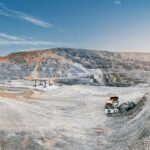
Pan Mine, Nevada. Nine months into the Turner Mining Group contract, and the numbers are finally worth talking about. Mining Americas — formerly Minera Alamos, and let’s not pretend a name change changes the rocks — reported mining rates climbing from roughly 51,800 tons per day at the start of 2026 to more than 70,000 tons per day by June. The company credits the new contractor, brought in this past January to take over the mining at Pan.
Here’s what this really means. Contractor transitions at active mines are where operations go to die. You’re swapping out crews, fleets, and mine planning mid-flight — no shutdown, no ramp-up runway. Plenty of operators have watched production crater for two quarters while the new contractor “settles in.” That Turner and Mining Americas kept material moving during the handover, and then grew rates 35% in six months, is genuinely competent execution. Rare enough to note.
The quarterly numbers back the story up, mostly. Pan moved about 5.4 million tons of material in the June quarter alone, including 1.5 million tons of ore. First-half total: roughly 9.4 million tons. The fleet behind it is standard open-pit iron — CAT 777 haul trucks, loaders, drills — with about 130 Turner employees on site. Nothing exotic. This is a diesel, shovel, and truck operation, and the gains came from the boring stuff: shift discipline, fleet availability, mine plan coordination. Turner’s own VP of Operations, Tucker Jensen, said it plainly — the transition was only the beginning, and getting people, equipment, and operating systems in place while moving material every day took work across both teams. I believe him, because that’s exactly how these transitions fail when they fail.
Now, the part the press release wants you to fixate on: days hitting 90,000 tons or more, including 12 days in June. CEO Keaton Turner’s line — “you don’t get six months to figure it out” — is good copy. And Mining Americas CEO Darren Blasutti went further, saying the old contractor was moving about 45,000 tons per day while Pan has now seen days at 90,000. Here’s my take: peak days are marketing. Averaging is mining. Anyone who’s run a pit knows you can pull three monster days out of a fleet and pay for it the following week with breakdowns and a stretched maintenance schedule. The sustained average of 70,000 tons per day is the number that matters, and it’s a real improvement — but don’t annualize the 90,000-ton headlines. Blasutti cherry-picking single-day records in September while quoting a lower baseline from the old contractor is exactly the kind of framing you’d expect from a company that needs its story to sound good. I’m not saying the numbers are wrong. I’m saying know which numbers are load-bearing.
One thing that does hold water regardless of production spin: safety. Pan has surpassed five years without a lost-time injury and picked up the Nevada Mining Association’s 2025 Operator Safety Award for small mines. In a contractor transition — statistically one of the riskiest periods for incidents, with new crews learning new ground — that record holding is worth more than any production milestone. It also tells you Turner didn’t cut corners on training to chase tonnage. That’s how you avoid the spiral where safety incidents shut down the pit and erase a quarter of gains.
The broader takeaway for investors watching this space: contractor-led productivity gains at mid-tier operations are real, but they have a shelf life. The first nine months of a new contract typically deliver the easy wins — fleet optimization, blast patterns, haul road management, staffing to proper levels. Holding and building on 70,000 tons per day through year-end and into 2027 is the actual test. Equipment wears, ore hardness varies, and contractor margin pressures eventually show up in change orders.
The other thing to watch with Mining Americas is cost per ton. Moving more material is only good news if the all-in cost per ounce moves in the right direction. More waste stripped today can mean better ore access later, or it can mean burning cash on stripping you didn’t need. The release doesn’t say, and that silence is worth noting. Ask for unit costs before you get excited about tonnage records.
Verdict so far: solid operational execution, honestly reported at the average level, dressed up a bit at the headline level. Turner earned its fee. Blasutti earned a better press release. Now show me the second year — that’s when the market finds out whether this was a turnaround or just a low bar finally cleared.