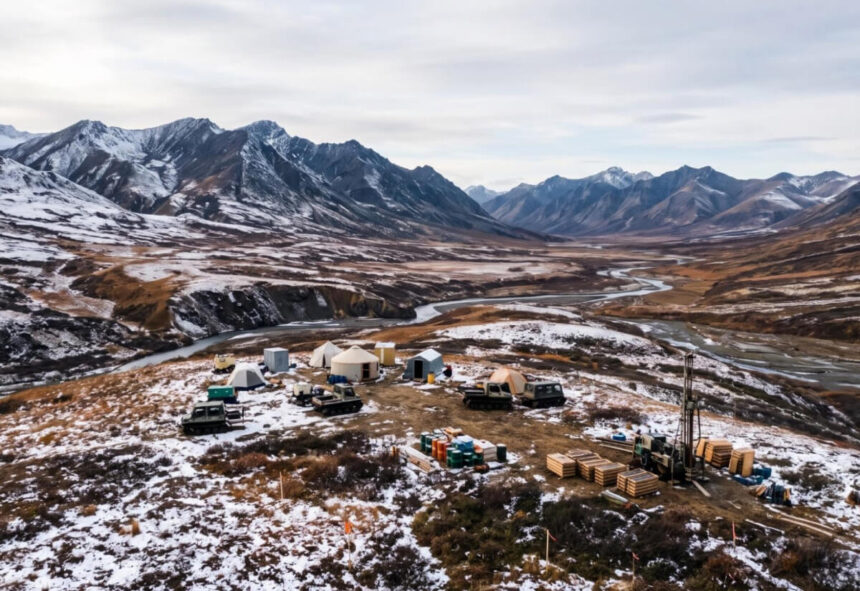
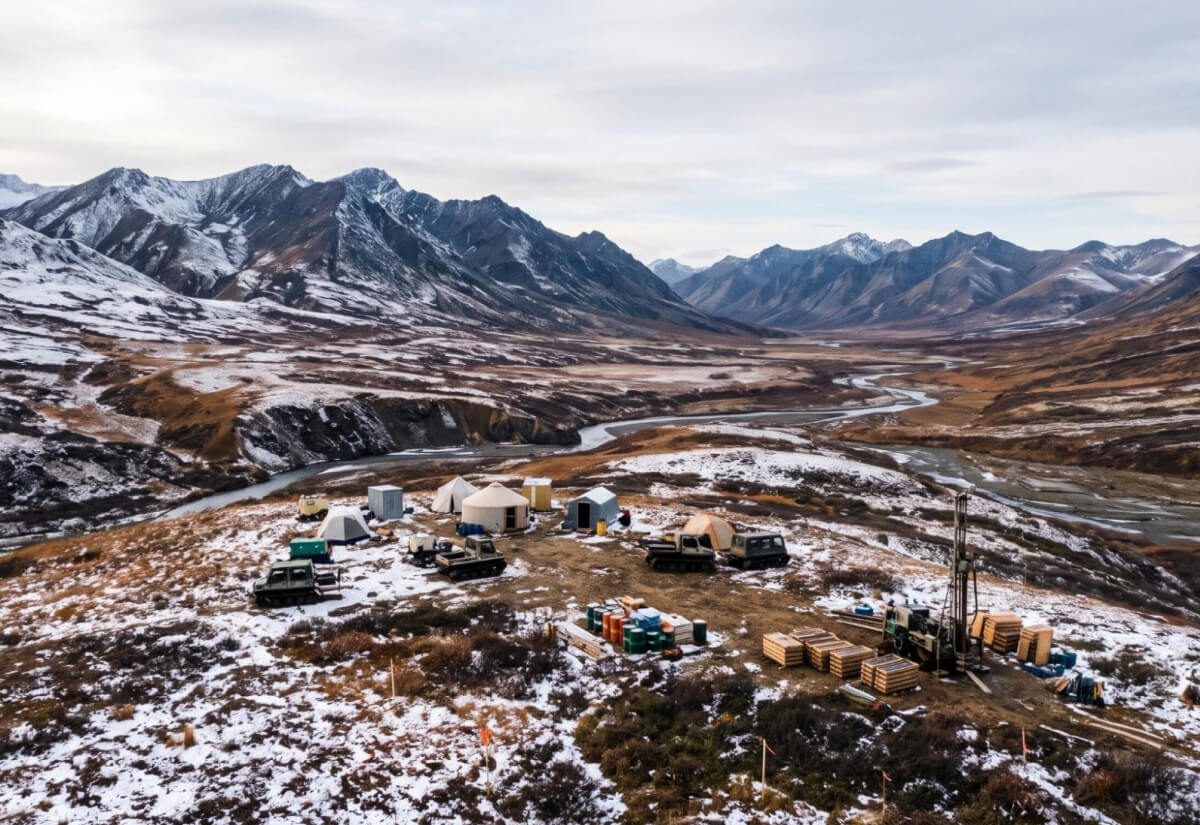
Lux Copper Corp. Ltd. has staked 326 additional state mining claims at its Baird copper project in northwest Alaska, lifting the landholding to roughly 236 square kilometres. The expansion follows completion of the company’s first drilling campaign at the Omar prospect, with assays due late November.
Per the November 10 announcement, the Alaska Department of Natural Resources issued the claims following an earlier staking program. The new ground adds 210 square kilometres adjacent to existing holdings in the Western Brooks Range, expanding Baird to roughly nine times its prior footprint.
Traders watching LUX should note the sequence: staking first, assay catalyst second. The company has effectively loaded a binary event — November results — into a much larger property package. Whether the tape rewards the expansion or treats it as noise depends entirely on what the assays say. Announcements of this type rarely move a junior’s chart meaningfully without confirmation from results. Price is the truth.
New Ground Around Established Prospects
The additional claims form a continuous property around Baird’s original exploration area, covering ground along geological trends Lux can now investigate alongside the known Omar, Frost, and Deadfall prospects.
Baird sits between the Ambler mineral district and the Red Dog district. Previous work identified copper and zinc occurrences, though much of the newly acquired ground remains underexplored.
Lux will evaluate the expanded holding using historical records and geophysical data from the 2026 field season. The near-term work is triage: determining which areas justify mapping, sampling, and follow-up drilling.
Historical Results at Omar, Frost, and Deadfall
Omar carries the strongest drilling record. Historical hole BC-06 returned 37.7 metres at 2.45% copper, per Lux’s October 2026 drilling announcement. Earlier exploration also delineated a copper geochemical trend running roughly four kilometres.
The other prospects skew zinc. Frost’s 2012 drilling intersected 53.1 metres at 1.08% zinc. Deadfall channel sampling returned an interval grading 6% zinc with associated silver.
Treat these as baseline data, not validation. Historical intercepts from prior operators set the reference range, but continuity and geometry remain unproven on Lux’s watch. The market rarely pays for historical results twice — it pays for replication.
First Lux Drillholes Encounter Visible Copper
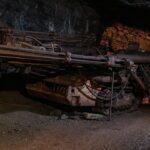
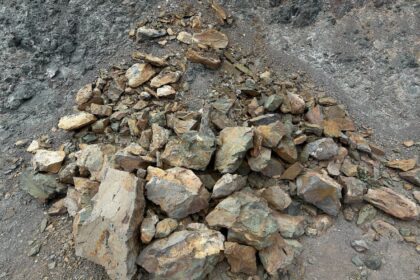
Lux began drilling at Omar in September and completed three diamond holes during the 2026 season. All three logged visible copper mineralization in carbonate rocks, including intervals starting at surface.
Near-surface logged intervals ran approximately 26 to 32 metres, with copper-bearing sections recorded at depth. Core logging identified bornite, chalcocite, and chalcopyrite, plus malachite and azurite in oxidized zones.
Two caveats matter. First, logged lengths are downhole measurements — true widths are undetermined. Second, visible mineralization is an observation, not a grade. This setup lacks confirmation until the lab reports. Junior charts are littered with run-ups on visual-copper headlines that reversed hard once assays underdelivered. If LUX traded up on the September–October visual news without a volume expansion, that move was speculation, not accumulation.
What to Watch Into the November Catalyst
The assay release is the only event that matters on the chart right now. Watch for three things: headline metres and grades against the BC-06 benchmark (37.7m at 2.45%), the immediate volume response, and whether any pop holds above the pre-announcement range.
A clean confirmation looks like this: assays at or better than historical intercepts, followed by a breakout candle on volume at least two to three times the recent average, with continued follow-through over subsequent sessions. Anything less — a gap that fills within days, or a spike on declining participation — signals exhaustion and should be sold into, not chased.
Conversely, if results disappoint, the staking news provides no downside cushion. Expanded land packages don’t bid a stock up. Support levels established before the drilling campaign become the only structure that matters, and a decisive break below them repositions the chart into a distribution profile.
Preparation for Expanded 2027 Drilling Program
During the 2026 campaign, Lux completed an airborne survey using magnetic, radiometric, and electromagnetic methods. The company plans to review that data alongside the Omar assays to select further drill targets.
Planning is underway for a larger 2027 program, with fieldwork set to restart in March. Assay results will guide follow-up holes at Omar, while the expanded landholding adds geological trends beyond the established prospects.
The 2027 program extends the catalyst timeline well past November. For position sizing, that matters: liquidity in juniors typically thins between field seasons, and momentum built on a positive assay can decay over a multi-month news gap. If the November results confirm, the trade is to scale on strength into the news vacuum, not to assume the tape stays bid.
The structure here is straightforward — three logged holes with visible copper, a defined assay date, a nine-times-larger property, and a 2027 program on deck. The probability trade resolves on the lab numbers. Until then, the chart owes you nothing, and patience costs nothing.
Source: https://www.miningfeeds.com/lux-copper-expands-baird-project-with-326-new-claims-in-alaska/