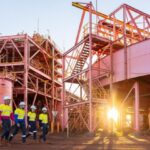
Hitachi Energy, LKAB and Scania are teaming up to put autonomous downward-pantograph charging into LKAB’s Malmberget mine — electric haul trucks that top up automatically, no human hands on a plug. LKAB brings the mining know-how, Scania the electric heavy trucks, Hitachi Energy the charging infrastructure. Three big names, one pilot project. That last word matters more than the press releases will admit.
Here’s what this really means: they’re installing a Grid-eMotion Fleet charging system 1,250 meters underground, delivering over 400 kW through a fixed overhead pantograph that connects itself to the truck. Charge in minutes during scheduled breaks, no manual coupling, no extra real estate. It’s a sensible engineering solution to a real problem — diesel haulage in deep mines is expensive, hot, and filthy, and ventilation alone to handle diesel exhaust at that depth costs a fortune. Electrifying haulage underground isn’t vanity; it’s arithmetic.
But let’s keep our heads. Commissioning is planned for spring 2027, and the first truck is only now being adapted. This is a reference facility, not a rollout. Hitachi Energy gets its first global mining reference site out of it, which tells you the real product here may be the case study as much as the kilowatts. That’s not a knock — everyone in infrastructure sells the pilot before they sell the fleet — but investors should read “first global reference facility” as “unproven at scale.”
This isn’t the first time we’ve seen this circus. Heavy-duty electrification announcements have been rolling in for a decade, and the gap between the press conference and the profit line is usually measured in years and writedowns. Mining is actually one of the more credible venues for it — fixed routes, controlled environments, duty cycles that favor opportunistic charging — which is exactly why a pantograph system on a repeatable underground loop makes more sense than aspirational long-haul trucking vaporware. The physics cooperate here in a way they don’t on Highway 1.
The quotes from the executives are the usual partnership boilerplate — “safer, more productive and sustainable future,” “close collaboration between industries.” Fine. Translate it: LKAB needs to mine deeper as its shallower ore bodies deplete, and diesel logistics at depth get progressively uglier. Automation and electrification aren’t greenwashing for them; they’re survival economics. Scania gets real-world duty-cycle data on trucks that most customers can’t offer. Hitachi Energy plants a flag in a niche it wants to own. Everyone’s incentive is legible, which is more than you can say for most “ecosystem” announcements.
Scania’s Pilot Partner program is the honest part of the whole story — they explicitly frame it as learning how the pieces work together in real operations. That’s the right posture. Anyone who’s deployed capital into industrial tech knows the integration phase is where projects die: charging schedules versus ore movement, battery degradation in hot, dusty underground conditions, downtime when a pantograph fails 1,250 meters down and your haulage chain stops with it.
For anyone watching this space, the practical takeaway: watch uptime and cycle-time data from the pilot, not the headline power rating. 400 kW sounds impressive; what matters is whether these trucks haul the same tonnage as diesel equivalents with fewer operational headaches, and whether the charging downtime eats into shift economics. Also watch whether LKAB converts this into fleet orders — a pilot is a rounding error, a fleet conversion is a business.
The long-standing Hitachi-LKAB relationship de-risks execution somewhat, and Sweden’s grid and industrial base make the power supply question less fraught than in, say, remote African or Australian mining ops where electrification plans often quietly drown in diesel-gen backups. But don’t model this as a near-term revenue driver for anyone involved. It’s option value and engineering education, priced accordingly.
Real assets, real industry, unglamorous problem, credible players. That’s the kind of electrification story I can take seriously — just don’t confuse a pilot in Malmberget with a thaw in heavy-transport economics overnight.