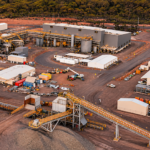
Battery-electric equipment is transitioning from pilot programs into production fleets, and that shift carries implications well beyond the operational headlines. At Agnico Eagle’s Macassa mine in Ontario, the company has reported 22 battery-electric vehicles in regular underground use. For investors, the relevant question is not whether electrification is coming to mining — it clearly is — but what it does to capital intensity, operating risk, and ultimately shareholder returns.
Start with the capital allocation angle. Battery-electric fleets require meaningful upfront investment: equipment premiums over diesel equivalents, charging infrastructure, and revised ventilation economics. The offsetting benefits are real but take time to materialize — lower diesel consumption, reduced ventilation and refrigeration costs in deeper mines, and lower maintenance hours on drivetrains. Macassa, a deep underground operation, is a sensible test case because ventilation savings scale with depth. Where those savings are modest, the payback math becomes far less compelling, and investors should expect operators to be selective rather than convert entire fleets at once.
The risk profile also changes in ways that are easy to overlook. Lithium-ion battery fires behave differently from diesel fires: they can enter thermal runaway, propagate between cells, and be difficult to suppress with conventional systems. Underground, where evacuation and response are constrained, this is a material operational hazard, not a technical footnote. The industry is adapting — updated fire suppression standards, thermal monitoring, changes to refuge bay design, and revised emergency response planning are all in motion. For a disciplined investor, the key point is that these are manageable risks with known mitigations, but they impose compliance and capital costs that should appear in mine-level budgets and life-of-mine plans.
None of this changes the fundamental investment thesis for a company like Agnico Eagle, which carries a strong balance sheet, consistent free cash flow generation, and one of the more defensible dividend policies among senior gold producers. Electrification is an operational efficiency story layered on top of the underlying commodity economics. If it lowers all-in sustaining costs per ounce over time, it modestly improves margins and strengthens the durability of cash returns to shareholders. That is the correct frame: incremental improvement in cost structure, not a thesis-changing event.
Two cautions are warranted. First, treat vendor and operator claims of rapid payback skeptically until audited cost data confirms them; pilot-stage economics routinely flatter full-scale results. Second, monitor whether these capital investments crowd out returns or add leverage at weaker operators. At companies with thin margins and heavy debt, electrification becomes a discretionary burden rather than a competitive advantage.
The durable takeaway is straightforward: electrification of mine fleets is a disciplined, multi-year capital program that shifts both cost curves and risk registers. Investors should track it as they would any major capital plan — through measured evidence of lower unit costs, sustained free cash flow, and a dividend that remains covered through the transition.