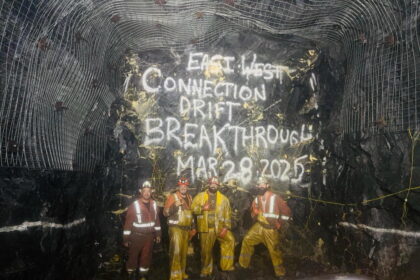
Ur-Energy (TSX: URE; NYSE-A: URG) is looking to drilling, acquisitions and potentially processing for other miners to fill unused capacity after restarting its Shirley Basin uranium mine in Wyoming, CEO Matthew Gili told The Northern Miner in October.
Initial uranium recovery at Shirley Basin began in April, the first mining at the site since 1992. The operation sent its first shipment of uranium-loaded resin to Ur-Energy’s Lost Creek processing plant in August. Shirley Basin, about 250 km northwest of Cheyenne, helped pioneer in-situ recovery in the 1960s.
“We are in the process of rebuilding the renaissance of United States’ uranium production,” Gili said. “We’re now making regular shipments of uranium-loaded resin from Shirley Basin to Lost Creek for processing. That’s our hub and spoke model.”
Using Lost Creek to process material from both mines saves Ur-Energy from having to duplicate equipment. The two operations have combined licensed capacity for 4.2 million lb. of uranium oxide (U₃O₈) a year, including capacity to process material from other producers, compared with about 2.2 million lb. of capacity already built.
Industry rebuilds
The expansion follows Lost Creek’s 2023 restart and uranium’s rise above $100 per lb. in January 2024. Spot prices have since cooled while long-term contract prices have continued to climb.
In-situ recovery uses wells to circulate a solution through an orebody, dissolve the uranium and pump it to the surface for recovery. The method avoids excavating ore and can cost less than conventional mining where the geology is suitable.
Ur-Energy packaged 236,472 lb. of uranium oxide at Lost Creek in the first half of 2026, including 140,873 lb. in the second quarter, the company said in its August results. It is due to report third-quarter results after markets close Monday.
A March 2024 preliminary economic assessment projected about 1 million lb. of annual output over nine years at Shirley Basin. The mine hosts 9.1 million lb. of measured and indicated uranium oxide resources at an average grade of 0.23%, according to the company’s project disclosure.
Lost Creek, about 140 km west of Shirley Basin, is expected to produce about 1 million lb. annually over a 13-year mine life. The property hosts 11.9 million lb. of measured and indicated equivalent uranium oxide resources and 10.4 million lb. inferred, according to the March 2026 estimate.
Finding more pounds
“[That extra 2 million lb.] could come from our material, from toll milling other producers’ material, through organic growth [or] through M&A,” Gili said.
None of the neighbouring uranium projects in the Shirley Basin district are producing, limiting the immediate prospects for processing material from other miners, Red Cloud Securities mining analyst David Talbot said.
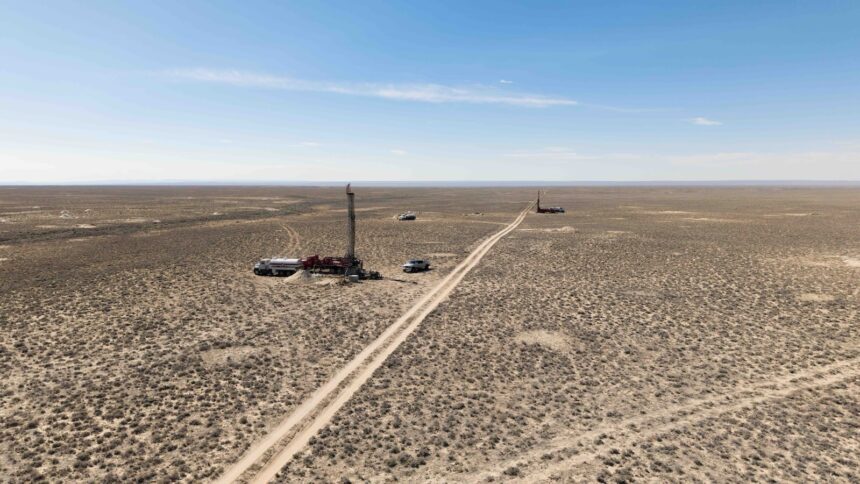
Ur-Energy announced a 120-drill-hole program at Lost Creek South on Oct. 29. It’s part of a roughly 142-sq.-km land package that is only about 10% explored, Gili said. Delineation drilling last year at Lost Creek added about 3.5 million lb. of inferred uranium oxide resources, an increase of 34%, he said.
The company’s next potential development is Lost Soldier, north of Lost Creek. A technical report expected by year-end will help determine whether to proceed with construction.
Ur-Energy shares were 7.5% weaker at C$0.98 at Thursday’s close in Toronto, valuing the company at about C$389 million.
Labour shortage
Ur-Energy acquired former Shirley Basin owner Pathfinder Mines in 2013. Finding skilled workers to restart the operation was one of its biggest challenges, Gili said.
“We’d lost an entire decade’s worth of skilled well drillers, skilled contractors and skilled plant operators,” he said. “We had to rebuild the industry, particularly in Wyoming.”
“When you come out of a hiatus and you go to restart, don’t assume that you could just hire these people back,” Gili said. “They’ve moved on.”
Contract prices
The long-term uranium price had risen about 16% over the previous year to $96.50 per lb. when Gili spoke. Ur-Energy was able to restart earlier than some producers because its in-situ operations have relatively low costs, he said.
“Within ISR mining in the Western United States, we’ve reached that incentivization price,” Gili said. Conventional uranium mines tend to need another $30 to $40 per lb. to justify development, he said.
Wyoming resources
Wyoming hosts 366 million lb. of uranium resources, the largest base among U.S. states, according to a historical estimate cited by the U.S. Geological Survey in 2015. National production peaked at 43.7 million lb. in 1980. U.S. producers turned out about 2.1 million lb. in 2025, according to the Energy Information Administration.
“I don’t need to go to Asia or Africa to be able to find a very reliable source of future resources,” Gili said. “Just continue the program we’re on now to develop Wyoming as a district scale uranium producer, and then start to bring in other resources that are in the area into Ur-Energy and bring those into production.”
Source: www.northernminer.com — article syndicated from the publisher’s feed; all rights remain with the original publisher.