Freeport just greenlit a $4.5 billion expansion at Bagdad, its copper and molybdenum operation in northwest Arizona. The board approved it, the press release is glowing, and the usual suspects will tell you this is America’s copper future arriving on schedule. Here’s what this really means — and what deserves your skepticism.
The basics first, because they’re solid. Bagdad is a brownfield site that’s been running since 1945 — 80 years of operating history on a known orebody. The expansion more than doubles mining and milling rates, pushing long-term copper production north of 400 million pounds annually, with roughly 225 million pounds of that being incremental. Molybdenum production rises to over 20 million pounds. Once complete, Bagdad becomes the second-largest copper mine in the US, behind — no surprise — Freeport’s own Morenci.
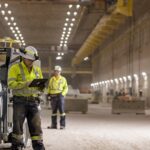
Brownfield is the right word to fixate on. This isn’t the first time we’ve seen this circus: junior miners and even majors routinely promise greenfield projects that come in double the budget and three years late. Brownfield is a different animal. Existing infrastructure, an experienced workforce, a mapped orebody, water and power already sorted. Freeport is building a new primary crusher, an overland conveyor, a water pipeline, and expanding the autonomous haul fleet — they’ve already converted 33 Cat 793Ds and finished the full fleet conversion in 2025, making Bagdad the first major US mine running fully autonomous haulage. That de-risks the execution story considerably. Not eliminates — de-risks.
Now the numbers you should actually scrutinize. Capital spend breaks down roughly 20% in 2027, 30-35% in 2028, and the balance through 2029-2030. That’s a four-to-five-year money commitment landing squarely in a period where mining capex inflation has been ruthless. Tire costs, steel, labor — everything in mining has gotten more expensive, and Arizona doesn’t have a surplus of experienced mill operators sitting on the bench. Freeport says it aims to complete the project “within current cost estimates.” Every project says that. The reserve grade here is 0.43% copper equivalent across 2.6 billion tonnes — a big, low-grade pile that only works at scale, which is precisely why they’re pushing concentrator capacity up by roughly 115,000 tonnes per day. The economics hinge on that scale actually materializing.
The break-even claim is $4.00 copper and $20 molybdenum. Spot copper has been well above that, which is the entire reason this project got approved now and not five years ago. But here’s the thing veterans know: break-evens quoted at project approval have a habit of drifting upward. Long-term unit net cash costs are projected to fall about 20% from economies of scale, automation, and moly by-product credits. If those credits hold. Molybdenum pricing has been whipsawed by steel demand cycles for decades. Don’t build your copper thesis on the moly kicker.
Freeport’s CEO Kathleen Quirk framed this as advancing the “US copper growth strategy” and called Freeport “America’s Copper Champion” — a trademarked phrase, mind you. The demand narrative underneath is real: electrification, grid buildout, data centers, defense. Meanwhile, permitting a new US copper mine from scratch takes a decade-plus, so brownfield expansions are effectively the only way American supply grows. That’s not marketing spin — that’s structural reality. Freeport owns most of the few places that can grow. This is a genuine moat, even if the branding is insufferable.
Timing of the production matters too. Initial production is targeted for mid-2030 after a 3.5-year build. Anyone telling you this project moves the copper supply needle this decade is selling you something. The incremental 130,000 tonnes of copper equivalent per annum arrives at the end of the decade, and only if the schedule holds. Construction phase claims 4,000-plus direct and indirect jobs; long-term employment in the thousands. Good for Arizona, fine for the community story — irrelevant to your investment thesis.
What’s my take? Freeport is one of the few large-cap names where the copper story is backed by actual shovel-ready tonnage instead of PowerPoint decks about deposits in jurisdictions that confiscate assets. This is the good version of the copper trade. But discipline still applies. Discretionary capex of $4.5 billion against a cyclical commodity means Freeport is making a leveraged bet on the late-decade copper price. If copper retreats below that $4 break-even for a sustained stretch, expect the tail-end spending to get “deferred” — that word appears in every major’s vocabulary when cycles turn. The capex is classified as discretionary under their financial policy for exactly that reason.
Watch three things from here: capex revisions on the 2028 tranche — that’s where overruns historically show up; molybdenum pricing, which cushions or guts the cost story; and whether the autonomous fleet actually delivers the mining-rate gains they’re modeling, because the automation savings story has been oversold across the industry more than once.
The ore’s been sitting there since 1945. The only new variable is whether this cycle’s copper price holds long enough to pay for digging it up faster.