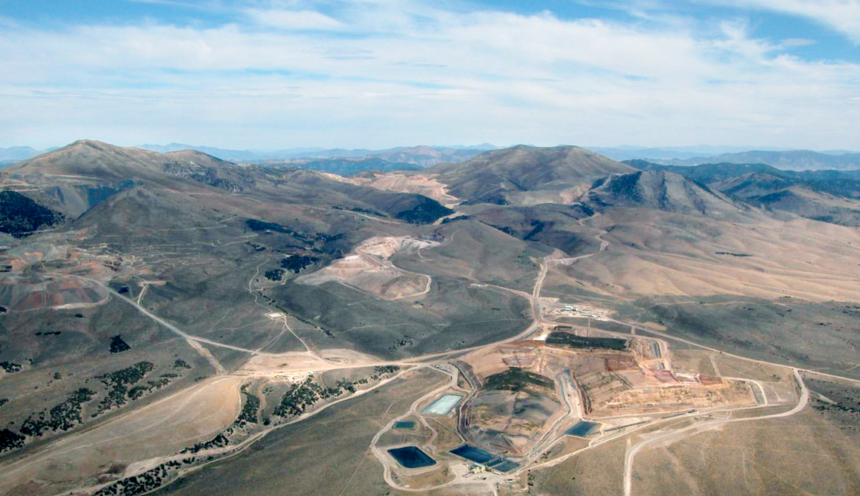
Two employees of the same contractor died following separate accidents on Sept. 3 at Kinross Gold’s (TSX: K; NYSE: KGC) Bald Mountain gold mine in Nevada, according to preliminary U.S. safety reports.
Newt B. Wakefield, 22, was injured while changing truck-bed liners when rigging broke and a liner struck him, the Mine Safety and Health Administration said in its preliminary notice. He died on Sept. 18 from complications related to his injuries.
Brandon D. Wheatley, 31, a leadman joining pipes, died after a pipe he was underneath slipped off a jack and struck him, according to the agency’s separate account.
Both men worked for TJS Welding of Spring Creek, Nevada. The incidents were unrelated, and company-wide safety stand-downs were held afterwards to reinforce procedures and controls, Kinross said in its quarterly results Wednesday.
The preliminary reports do not represent final determinations of the accidents’ nature or causes, MSHA cautioned.
Difficult quarter
The safety disclosure came as Kinross reported a 59% year-on-year decline in attributable free cash flow to $281.3 million (C$394.8 million) for the third quarter ended Sept. 30 despite higher gold prices. Lower output, rising operating costs and heavier development spending reduced cash generation as the company worked to stabilize La Coipa in Chile and Round Mountain in Nevada.
“We remain on track for our updated guidance, supported by operational improvements at Round Mountain and La Coipa,” CEO Paul Rollinson said in the release.
Kinross shares closed 0.4% weaker in Toronto on Wednesday at C$32.18 apiece, before the results were released after market close.
La Coipa’s quarterly production nearly halved from a year earlier to 29,203 gold-equivalent ounces. The operation processed 691,000 tonnes of ore, down 26%, while gold recovery fell to 62% from 76%. Winter weather disrupted mining and milling, adding to problems with higher copper grades and lower recoveries in some sulphide ore.
Improving weather allowed mining rates and throughput to recover and ore blending to resume towards the quarter’s end. Plant improvements were also helping recoveries, Kinross said.
Guidance cut
Round Mountain produced 27,068 gold-equivalent oz., down 27% from a year earlier, although higher mill grades and recoveries improved output from the second quarter. Lower mining rates had deferred access to higher-grade ore.
Fort Knox in Alaska faced mill maintenance and planned lower grades. Bald Mountain also recorded a planned year-on-year production decline, although output improved from the second quarter as more ore reached the leach pads.
Problems at La Coipa and Round Mountain had already led Kinross to cut its forecasts on Sept. 23 to between 1.84 million and 1.86 million gold-equivalent oz. annually for 2026 and 2027.
Third-quarter attributable output of 424,693 gold-equivalent oz., down 16% year-on-year, closely matched the roughly 425,000 oz. flagged in that update.
Higher spending
Even excluding working-capital movements, adjusted attributable free cash flow declined 41% to $391.4 million.
“Overall, we view 3Q as solid after the guidance update, with results tracking well within the revised ranges and backed by enhanced shareholder capital returns,” Desjardins analyst Bryce Adams wrote in a note late on Wednesday.
Scotiabank analyst Tanya Jakusconek took a neutral view, noting adjusted earnings before interest, taxes, depreciation and amortization fell 2% below her estimate because of lower sales. Adjusted earnings per share beat her forecast, but lower depreciation and taxes accounted for the improvement, she said.
Attributable capital spending rose 43% to $439.5 million as work accelerated at Great Bear, Curlew, Redbird and Round Mountain’s stage X development. Sales timing also weighed on free cash flow, Kinross said.
Attributable all-in sustaining costs increased 20% to $1,947 per gold-equivalent ounce sold. Higher energy, contractor and reagent costs, lower production and increased royalties linked to gold prices pushed up operating costs.
Kinross realized an average gold price of $4,249 per oz., up 23%, but revenue slipped 2% to $1.77 billion as fewer ounces were sold. Paracatu in Brazil and Tasiast in Mauritania remained its two lowest-cost operations and supplied more than half of quarterly production.
Project milestones
At Bald Mountain, Kinross poured first gold from Redbird 1 early this month. Redbird 2’s satellite pits are now fully permitted, while the initial leach-pad expansion is nearing completion. Redbird 2 is expected to begin producing in 2028 and extend Bald Mountain’s life into early 2032.
At Great Bear in Ontario, surface construction for advanced exploration is substantially complete and the two underground declines have passed a combined 500 metres. Detailed engineering for the main project is more than 55% complete.
Kinross expects the provincial technical review to finish by year-end, while the federal impact assessment and negotiations with Wabauskang and Lac Seul First Nations continue.
Round Mountain’s stage X development remains scheduled for first production in 2028. Underground development has exceeded 9,600 metres, about 8% ahead of plan, and infill drilling indicates more ounces than expected in the initial mining areas.
At Curlew in Washington state, underground development is ahead of schedule, with more than 3,600 metres completed by Sept. 30. Tailings dewatering plant construction and mill refurbishment are advancing, with first production expected in 2028.
Detailed engineering has begun at Lobo-Marte in Chile, where permitting continues and first production remains targeted for the early 2030s.
Kinross ended September with $2.6 billion in cash and $1.9 billion in net cash. It retained its commitment, increased in September, to return half of this year’s free cash flow to shareholders.
Source: www.northernminer.com — article syndicated from the publisher’s feed; all rights remain with the original publisher.