Epiroc is building out Surface Mining Automation Centers — SMACs, in company shorthand — and wants the mining world to know about it. Four locations: Garland, Texas (autonomous drilling), Logan, Utah (autonomous haulage plus their OEM-agnostic LinkOA platform), Örebro, Sweden, and Perth, Western Australia. I sat through the pitch from Chris Blignaut, Epiroc’s Automation Manager for Surface Mining. Here’s what this really means — and where the marketing ends.
The core idea is consolidation. Before the SMACs, Epiroc was already doing automation development, testing, training, and operational support — just scattered across separate sites with disconnected teams. Pulling it all under one roof at decentralized hubs shortens development cycles and, more importantly to them, shortens “time to value” for customers. That last phrase is consultant-speak, but it points at something real: in autonomy, the technology is rarely the bottleneck. Integration, training, and change management are. A vendor that can compress that timeline has a genuine edge. This isn’t the first time we’ve seen this circus — centralized innovation hubs have been the corporate playbook for a decade — but in mining automation, the execution matters more than the concept, and Epiroc’s execution looks substantive.
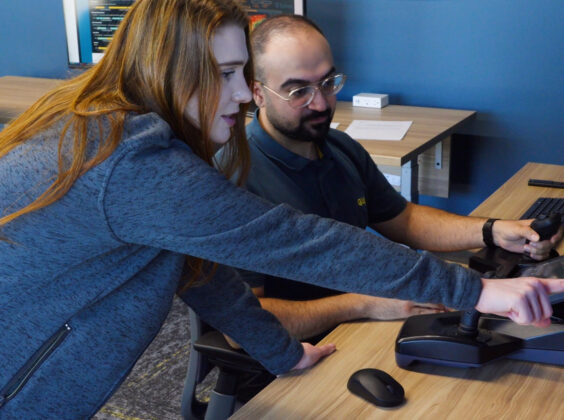
The facilities themselves run the full product lifecycle. System integration engineers, developers, testing teams, product management, hardware-in-the-loop labs, simulation environments, demo rooms running the latest software stack, and control rooms that can operate actual autonomous drills remotely. There’s also a training room for what Blignaut calls an autonomy boot camp — hundreds of customers have come through, sat in the control room, and operated machines themselves. Smart move. The single biggest obstacle to automation adoption isn’t technical; it’s a workforce and management team that doesn’t trust the kit. Let a mine superintendent drive a drill from a control room in Texas before it goes live at his site, and you’ve removed half the sales friction. That’s salesmanship dressed up as collaboration, but it’s effective salesmanship.
Now the strategic picture, which is where it gets interesting for anyone watching this sector. Epiroc’s installed base of autonomous drills — its own brand — numbers in the hundreds and is the real franchise. But the growth story is LinkOA, an OEM-agnostic platform that automates other manufacturers’ equipment and doubles as the command-and-control system for Epiroc drills. The flagship proof point: Epiroc and Hancock Iron Ore converted 78 haul trucks — Hitachi and Caterpillar machines — from manual to autonomous operation, and that fleet passed 300 million tonnes hauled earlier this year. Those are real tonnes, not slideware. In a sector drowning in “pilot project” press releases, a working mixed-fleet conversion at that scale is the kind of evidence I actually pay attention to.
Here’s the part I find most credible, and a little counterintuitive. Blignaut argues that Epiroc not being a surface haul truck OEM is an advantage, because the industry is moving toward open, agnostic autonomy and operators want flexibility. Normally I’d wave off that kind of statement — every company claims its weakness is secretly a strength. But in this case, the logic holds. If you’re a mine operator running Cat trucks with Komatsu shovels and Hitachi everything else, you don’t want to be locked into one OEM’s autonomy stack any more than you wanted proprietary drilling fluids decades ago. Open standards won that war in other industries, and mining is finally catching up. Epiroc positioning itself as the neutral orchestrator — the “system integrator for the connected autonomous mine,” in their words — is a land-grab play for the integration layer, which is where the durable margins live. Ask anyone who sold picks and shovels during a gold rush versus the ones digging.
The SMACs also serve as a bridge during transitions. When a customer moves from conventional to remote or autonomous operations — say, a greenfield mine without a built-out control room or trained operators yet — Epiroc can provide interim remote operating support from its own control rooms, with data analysts and application support specialists sitting alongside operators, connecting to customer drills worldwide given the right connectivity and agreements. It’s troubleshooting plus stopgap operations. Practical, and it deepens the customer relationship in ways that are hard to unwind later. From a business moat perspective, that’s exactly what you want as an investor: your service embedded in the customer’s operations, switching costs rising every quarter.
Customers also use the centers to influence product roadmaps and to study what a proper control room looks like before building their own. Blignaut calls it a “strong return on investment” for both sides, and unlike most ROI claims, this one passes the smell test — cheap for Epiroc, valuable for the customer, and it locks in alignment early.
The skeptical take, since you’re not getting it from the company: “autonomy” in mining is still concentrated in a handful of geographies — Australia’s Pilbara above all — with flat, predictable haul routes and deep-pocketed owners. The brochure version where every mine on earth runs mixed autonomous fleets is years, possibly a decade, away. Harsh environments, patchy connectivity, regulatory variance, and union realities will slow rollout far below what the vendor decks imply. Epiroc knows this, which is precisely why they’re building training and change-management infrastructure rather than just selling software. The companies that win in automation won’t be the ones with the cleverest algorithms; they’ll be the ones that solve the human and operational side. The SMACs are a bet on that thesis.
The other thing worth watching: everyone is piling into open autonomy. Caterpillar, Komatsu, Epiroc, plus a crop of independents — all claiming agnosticism while quietly fighting to own the orchestration layer. “Open” is the word of the moment, and it will get stretched until it snaps. Mine operators should read the fine print on data ownership and interoperability before signing anything. Agnostic today can become sticky tomorrow; that’s how these platform businesses always evolve.
Bottom line: this is a well-executed, strategically coherent move by a company that understands the real bottlenecks in mining automation are people and integration, not sensors. The 300 million tonnes and the 78-truck conversion are the numbers that matter; the rest is positioning. Keep an eye on LinkOA adoption across mixed fleets. If that scales, Epiroc becomes infrastructure. If it stalls, SMACs are expensive showrooms. The evidence so far tilts toward the former — but in this business, I’ve learned to trust tonnes hauled, not press releases.
Source: https://im-mining.com/2026/10/27/epiroc-surface-automation-centers-all-access-automation/