




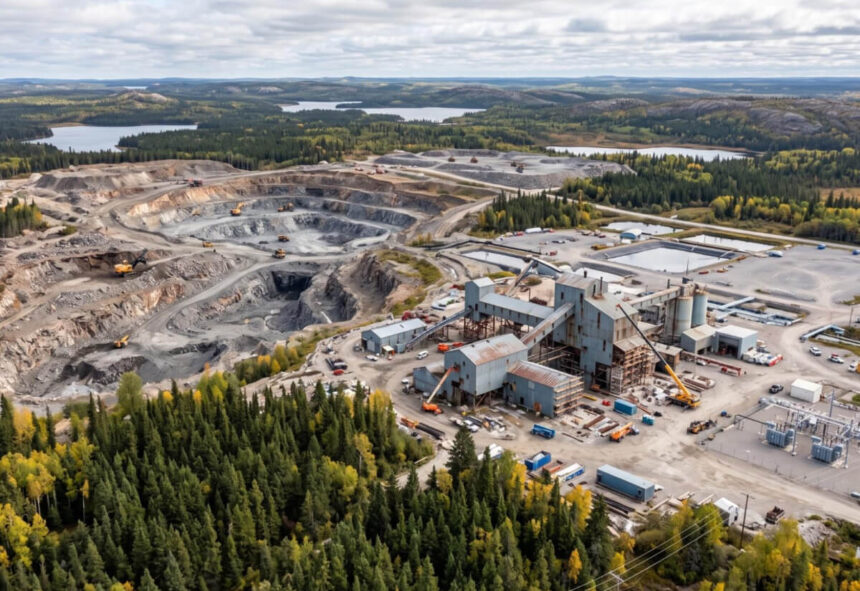

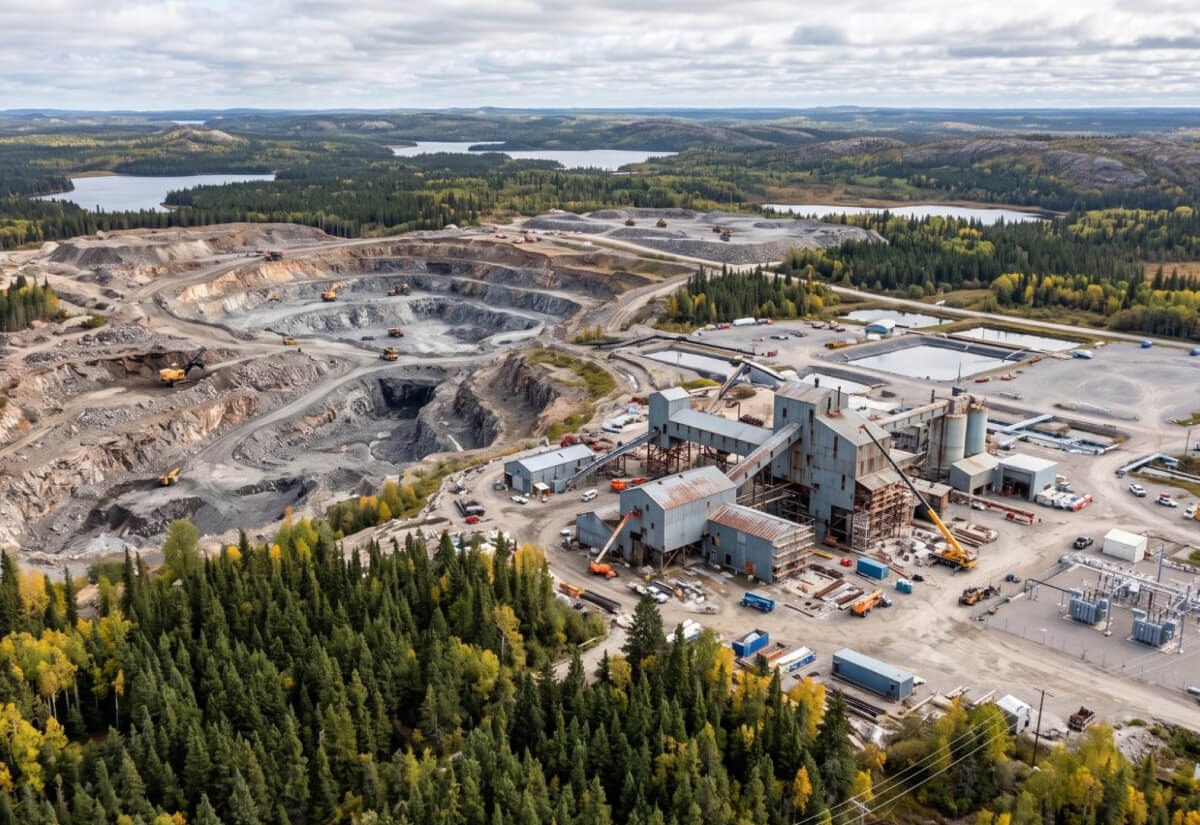
Minnova Corp. has put out a preliminary economic assessment for restarting the PL gold mine near Sherridon, Manitoba — a US$53.4 million pre-production plan targeting first output in 2028. Price is the truth, and the market will decide whether this PEA deserves a re-rating. What follows is the structure of the project itself, because the project structure is what the eventual financing and the chart will react to.
The PEA, released October 14, outlines average annual production of 62,200 ounces over a ten-year mine life. The development sequence starts with high-grade surface deposits feeding a refurbished processing plant, then transitions underground. That sequencing matters from a capital deployment standpoint: it front-loads revenue from the highest-margin material and defers the larger underground capital commitment until cash flow exists. On paper, that reduces financing risk. On paper.
Resource Base: The Numbers That Anchor the Setup
A September mineral resource update identified approximately 601,000 ounces of gold in the measured and indicated category. The open-pit portion grades 5.28 g/t — legitimately high grade for an open-pit scenario, and the primary reason this restart thesis exists at all. Grade is the closest thing a junior miner has to intrinsic support. Strip it away and the story collapses.
The revised plan departs from the prior feasibility study by prioritizing near-surface mineralization. Open-pit extraction begins first, underground access is developed in parallel, and both methods run simultaneously until the pits deplete. From 2031, underground becomes the sole mill feed. This is a standard de-risking sequence, but it also front-loads the best ounces — meaning the back half of the mine life rests entirely on underground performance that has not yet been demonstrated at feasibility level. Treat the out-year production profile with appropriate skepticism.
Minnova completed an extensive drill campaign earlier this year across the main deposit and along strike, with further drilling planned to test deeper extensions of PL and the nearby Nokomis deposit. Resource conversion and extension drilling are the two catalysts that can move a chart here. Watch for drill results with actual volume behind the move — a press release bump on thin participation is noise, not signal.
Infrastructure: The Reason the Capex Number Is Believable
The property operated previously as the Puffy Lake mine from December 1987 to March 1989. The existing processing plant is the backbone of the restart economics: Minnova plans to refurbish mechanical and electrical equipment, then double daily milling capacity in year two, supported by additional crushing and gravity recovery circuits.
Restarting brownfield sites with intact infrastructure is where junior gold capex estimates tend to hold up best. Greenfield builds overrun; brownfield refits less so, historically. Pre-production work includes pit stripping, water management upgrades, tailings infrastructure, and power generation. Mining will be contractor-run, which removes fleet capex from the front-end number but embeds operating cost exposure to contractor pricing — a real consideration at a 21:1 waste-to-ore strip ratio.
That strip ratio deserves blunt treatment. Twenty-one tonnes of waste per tonne of ore is heavy. The 5.28 g/t grade carries it at current gold prices, but the margin of safety on the open-pit phase is thinner than the headline AISC figure suggests. Any gold price downside compresses the open-pit economics first. This setup works at US$3,000 gold; it was not built to survive US$2,200.
Economics: Discount the Assumptions, Then Discount Them Again
At US$3,000 per ounce gold, the PEA projects an after-tax NPV of US$180.6 million at a 5% discount rate, with all-in sustaining costs of US$2,288 per ounce and total life-of-mine capital of US$120.9 million covering processing upgrades, underground ventilation, sustaining infrastructure, and closure.
AISC of US$2,288 leaves roughly a US$700 per ounce operating margin at the US$3,000 assumption. That is workable but not fat for a project of this scale. The NPV is sensitive to both the gold price input and the 5% discount rate — a PEA discount rate, not a financing-adjusted one. Minnova has no demonstrated path to the initial US$53.4 million yet, and junior miners at this stage typically fund via equity. Dilution is the hidden tax on the NPV. Until a financing structure is announced, treat the valuation as theoretical.
The Path Forward: Confirmation Is Not Optional
This remains a preliminary assessment. The gap between a PEA and a production decision runs through metallurgical studies, prefeasibility and feasibility work, contractor cost validation, and — critically — regulatory amendments. The existing environmental licence covers underground mining only; the open-pit component and additional mine access require permitting changes. Permitting timelines in Canada are not known for speed, and a 2028 production start assumes nothing slips. Historically, things slip.
From a positioning standpoint, the actionable items are specific: financing announcements, drill results from the deeper PL and Nokomis extensions, resource conversion updates, and permit progress. Each is a potential catalyst. Each should be judged by how price responds on volume, not by the headline itself. A rally that holds above the pre-news level for multiple sessions after a financing announcement signals accumulation. A spike-and-fade on announcement day is distribution dressed up as enthusiasm.
Bottom line: Minnova has assembled a technically coherent restart plan — high grade, brownfield infrastructure, staged capital, contractor mining. That is the right checklist. But a PEA is a hypothesis, not a confirmed trend. The setup lacks confirmation until financing is secured and feasibility de-risks the underground phase. Trade the catalysts as they validate or fail. Until then, this is a watchlist entry, not a position.
Source: https://www.miningfeeds.com/minnova-plans-us53m-investment-to-restart-manitoba-gold-mine-by-2028/


