

MAX Power Mining has lined up another C$10 million from Eric Sprott. Strip away the press-release language and this is a financing event — one insider increasing an already concentrated position in a name that trades on exploration results, not revenue. Price is the truth, and the truth here is that a well-capitalized holder is paying up again, which matters more than any headline about hydrogen.
The capital is earmarked for the Lawson natural hydrogen project in Saskatchewan, specifically the commercial validation drilling campaign at the Lawson Complex. Residual funds go to corporate overhead and marketing — standard allocation, nothing that changes the risk calculus.
The Setup at Lawson: What Has Actually Been Confirmed
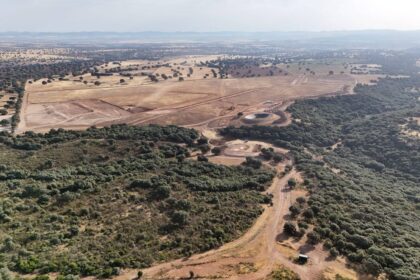
Lawson became the focal point after the company’s dedicated exploration well in late 2025 flowed naturally occurring gas with hydrogen concentrations measured at up to 286,000 ppm. That is proof of a subsurface natural hydrogen system — a genuine de-risking milestone. But confirmation of existence is not confirmation of economics. Anyone conflating the two is trading narrative, not structure.
The follow-through work is where the grade gets determined. A 3D seismic survey outlined a 14.2-square-kilometre structural closure inside a broader 28-square-kilometre area now designated the Lawson Complex. The current multi-well program is testing reservoir continuity, gas distribution, and production characteristics — the three variables that will either validate or invalidate the commercial thesis. Results feed into an independent valuation by GLJ Ltd, which will be the first third-party number attached to this asset. Watch how price reacts to that release; it will be the cleanest test of whether the market has been discounting optimism or pricing in substance.
District-Scale Optionality: The Genesis Trend
The Lawson Complex sits within the 475-kilometre Genesis Trend in south-central Saskatchewan, where MAX Power has assembled roughly two million acres of permitted ground — the largest permitted natural hydrogen land package in Canada. The eastern boundary tracks the Prairie Evaporite, the regional unit hosting the world’s largest potash reserves.
District-scale land packages are optionality, not value. Optionality only gets monetized when a discovery validates the model and expansion drilling extends it. Until the multi-well program at Lawson returns consistent flow data across the mapped structure, the Genesis Trend is a story on a map. The location does carry practical weight — roughly 80 kilometres northwest of Moose Jaw along the Regina-Moose Jaw Industrial Corridor, with existing transport and industrial infrastructure nearby. Infrastructure proximity reduces future capex assumptions and is worth noting when the GLJ valuation lands.
Insider Accumulation: Sprott’s Position Rises
Sprott’s stake climbs from 17.6% to approximately 19.5% on a non-diluted basis, and to roughly 30.5% fully diluted assuming exercise of all warrants under his ownership. He is already the largest shareholder and is adding at successive raises rather than averaging down out of a loss — a materially different signal.
Repeated participation by a single sophisticated investor in a pre-revenue explorer functions like accumulation on rising volume: it doesn’t guarantee direction, but it establishes a bid under the paper and reduces float. The warrants attached to his position are the caveat. Full exercise at roughly 30.5% partially diluted means dilution is already priced into the cap table whether shareholders like it or not.
A special shareholder meeting is set for August 20, where disinterested shareholders vote on approving Sprott as a control person. This is procedural — control-person approvals at this concentration are typically ratified — but the vote date is an event risk on the calendar. Expect volatility into and out of the meeting regardless of outcome; event dates attract short-term flow that has nothing to do with trend structure.
How Price Action Has Responded
The honest read: prior catalysts — the discovery well, the 286,000 ppm reading, the seismic delineation — have already been printed into the chart. The question for traders is whether this financing represents a higher low in a constructive base or another distribution event where insider buying and retail supply meet at resistance.
The pattern to watch is straightforward. If the stock holds its post-discovery consolidation range on declining volume into this raise and the drilling results, that is orderly accumulation behavior. If the financing news triggers a spike that stalls on heavy volume near prior highs, treat it as exhaustion — this setup lacks confirmation until price closes above the range on sustained volume. A single green candle on a financing headline is not a breakout. Breakouts require follow-through sessions and volume expansion; headlines only provide the first bar.
Drilling results themselves are binary catalysts that no indicator can front-run. RSI divergence and MACD crossovers are unreliable in names that gap on assay and flow-test data. Position sizing matters more than timing here. The GLJ valuation will be the next measurable checkpoint after the drill results, and it is the one that converts geological data into a bankable number.
The Broader Sector Structure
MAX Power entered the natural hydrogen space in 2024 and has compressed a typical exploration timeline: land assembly, first dedicated natural hydrogen well in Canada, 3D seismic, and now a multi-well commercial validation program. That pace of execution is real and measurable — each milestone has been delivered on schedule, which is more than can be said for most juniors in a nascent commodity theme.
The natural hydrogen sector itself lacks a mature pricing benchmark or established production history, which means the entire trade is a re-rating play. Valuations in this space are set by narrative momentum until the first commercial production case is defined — and Lawson, with its multi-well program and independent valuation, is positioned to set that reference point for Canada. Whoever defines the benchmark captures the liquidity. That is the actual trade thesis beneath the hydrogen rhetoric.
The Technical Verdict
The financing is constructive on balance: fresh capital removes near-term dilution risk from a desperate raise, an aligned major is deepening his position, and the drill bit is turning at the only project in the jurisdiction with a confirmed system. Those are structural supports, not buy signals.
The risk ledger is equally clear. Fully diluted Sprott ownership near 30.5% concentrates control in one holder — positive while he’s buying, a liquidation overhang the day he isn’t. The August 20 control-person vote adds event noise. And the commercial thesis remains unproven until the multi-well program demonstrates reservoir continuity and sustainable flow rates across the mapped 14.2-square-kilometre closure.
Trade the levels, not the story. Accumulation zones are defined by the post-discovery consolidation range; the invalidation is a decisive close below that range on volume. The next catalysts — drill results and the GLJ valuation — will force the chart to declare its hand one way or the other. Until then, price is the truth, and the truth is still forming.