A new study has more than tripled the expected value of PMET Resources’ (TSX: PMET; ASX: PMT) Shaakichiuwaanaan lithium project in Quebec, adding tantalum recovery and a higher lithium-price assumption.
Discounted at 8%, the post-tax net present value (NPV) for the CV5 deposit at Shaakichiuwaanaan reaches $5.1 billion (US$3.72 billion), with a 40% internal rate of return (IRR), PMET said in Tuesday’s updated feasibility study.
“We also believe there could be more positive updates on Shaakichiuwaanaan,” Raymond James mining analyst Brian MacArthur said in a note Wednesday.
A broader preliminary economic assessment expected this quarter will examine whether CV13’s high-grade lithium, caesium and tantalum could bring that deposit forward in the development schedule, MacArthur said. That could expand the investment case beyond the current CV5 plan.
Costs and prices
PMET shares gained 4% to $3.35 apiece on Wednesday morning in Toronto, valuing the company at $622.9 million. The stock has traded in a 12-month range of $2.96 to $7.81.
The update’s new economics depend partly on assumed spodumene prices of $1,788 per tonne, versus $1,221 in the previous feasibility study from last year. That 46% increase makes the price outlook central to the investment case alongside the revised mining sequence.
Using the previous study’s lithium-price and exchange-rate assumptions, the updated NPV rises by a more modest $700 million to $2.3 billion, with tantalum accounting for about $519 million of the improvement, PMET said.
The updated study strengthens the economic case for Volkswagen-backed PMET’s Shaakichiuwaanaan project, which the company ranks among the world’s 10 largest lithium pegmatite resources. Volkswagen holds a 9.5% stake in PMET.
At a lower spodumene assumption of about $1,400, the NPV falls to about $3.3 billion. Initial capital is $1.39 billion before credits, or $1.08 billion after anticipated pre-production and tax credits, PMET said.
Average cash operating costs fall 19% to $594 per tonne of spodumene concentrate, including a $148-per-tonne tantalum credit. Underground mining would begin first to reach the richer Nova zone.
PMET’s earlier lithium-only plan carried an after-tax value of about $1.6 billion and an 18% IRR with a 4.7-year payback. That plan already targeted a 2027 construction decision and commissioning from late 2029, according to the company’s February presentation.
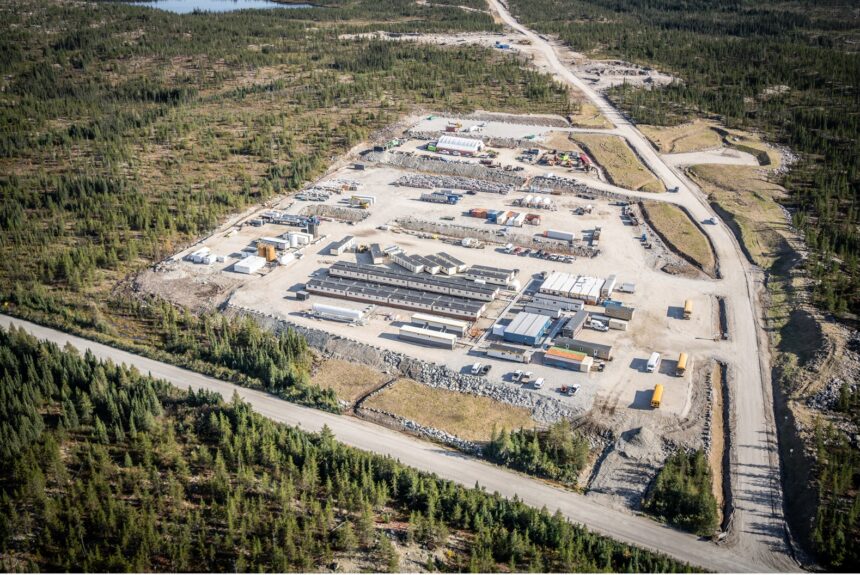
The project lies in Quebec’s Eeyou Istchee James Bay region, about 890 km north of Montreal. Its CV5 deposit is about 13 km south of the Trans-Taiga Road, near Hydro-Québec’s transmission corridor, PMET says.
The updated study also establishes an initial tantalum reserve for CV5, which contains 12,300 tonnes of Ta₂O₅, within 83 million tonnes of probable ore reserves grading 148 parts per million Ta₂O₅. A corrosion-resistant metal, tantalum is used in electronics, aerospace components and medical implants. The probable reserve’s lithium component grades at 1.27% lithium oxide containing 2.61 million tonnes of lithium carbonate equivalent, largely unchanged from the 2025 study.
Leadership change
PMET also began a search for a new CEO, with Ken Brinsden set to become executive chair in 2027 once a successor arrives. After a handover, he would become non-executive chair. Chairman Pierre Boivin would become lead independent director, PMET said in a separate announcement Tuesday.
“I believe the time is right to commence a structured and phased succession process,” Brinsden said.
PMET is targeting a final investment decision for Shaakichiuwaanaan in late 2027, followed by plant commissioning in late 2029 and commercial production by the end of March 2030. The timetable depends on securing financing and regulatory approvals.
Source: www.northernminer.com — article syndicated from the publisher’s feed; all rights remain with the original publisher.