Michigan is backing a new copper and nickel push near Lake Superior even as it continues cleaning up pollution left by the last mining boom.
Perseverance Metals (TSXV: PMI) announced a nickel-copper sulphide discovery in September, while Talon Metals (TSX: TLO; US-OTC: TLOFF) reported a mineralized magmatic conduit at its Roland target in October. Highland Copper (TSXV: HI; US-OTC: HDRSF) was awarded a $50-million (C$71-million) state grant in August for its Copperwood project.
“When you come in as a new operator, it’s like ‘trust us it’s going to be great, don’t worry about it,’” Talon CEO Darby Stacey told The Northern Miner. “But mining’s got enough of a reputation and a legacy where that’s not good enough.”
The region once supplied 96% of U.S. copper. At Torch Lake, copper still contaminates sediments about six decades after mining ceased. With exploration accelerating and proposed mines advancing near a lake that holds nearly 10% of the world’s surface fresh water, Michigan’s rules for modern mines could soon face a test across an entire district.
Environmental footprint
Indigenous peoples had mined and used copper on the Keweenaw Peninsula for more than 7,000 years, including float copper, loose pieces of native copper carried and deposited by glaciers.
The native copper industry declined as lower-cost western mines took market share, although the White Pine sulphide mine farther west continued until 1997. About 181 million tonnes of stamp sands and other tailings were deposited in Torch Lake, displacing about 20% of its original volume.
Copper concentrations in Torch Lake sediments were about 200% higher than in a nearby reference lake, with all measurements exceeding a threshold for predicted harmful effects by at least ninefold, researchers including scientists from the U.S. Geological Survey found in a 2025 study. Concentrations in larval insects were 160% higher, underscoring copper’s persistence in the food web.
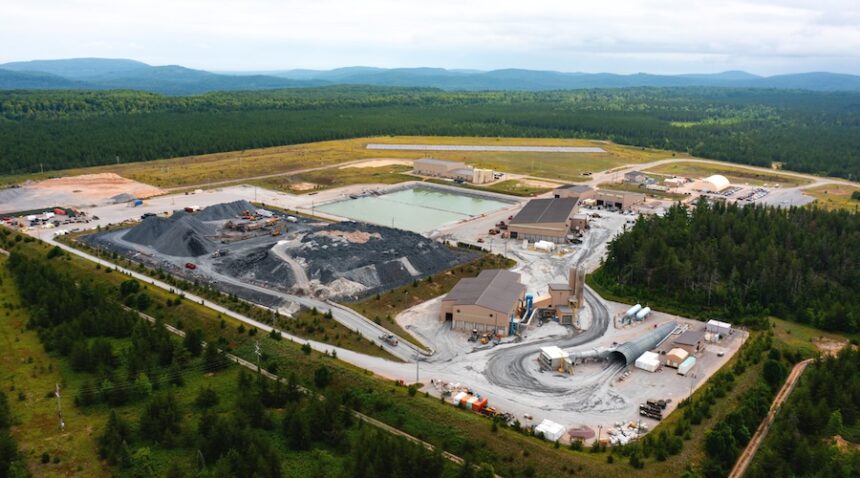
Talon’s Eagle mine is the only operating primary nickel mine in the U.S. and the first operation permitted under Michigan’s Part 632 nonferrous metallic mining law. Commercial production began in 2014. Lundin Mining (TSX: LUN), which acquired Eagle in 2013, operated it until Talon bought the mine and Humboldt Mill in January. Talon plans to use the mill to process ore from its Tamarack project in Minnesota.
Getting Eagle into production was contentious. Researchers writing in Resources Policy in November 2025 documented legal challenges between 2006 and 2014 by environmental groups and the Keweenaw Bay Indian Community. Opponents set up a month-long protest camp in May 2010, and about 500 community members demonstrated at the state capital as they challenged the permitting process.
Cleanup and trust
The U.S. Environmental Protection Agency added Torch Lake to the Superfund National Priorities List in 1986. The cleanup has included covering more than 900 acres (364 hectares) with topsoil and vegetation to reduce exposure to mining waste and limit erosion into nearby rivers and lakes, Scott Dean, a spokesperson for the Michigan Department of Environment, Great Lakes, and Energy, said by email.
“There are indications that the Torch Lake macroinvertebrate community is bouncing back,” Dean said. The department remains concerned about how long full restoration of the lake’s sediments could take, he added.
“How do you establish trust?” Stacey said. “We’re going to do all the sampling per the regulation but who’s to say, ‘we’re going to trust the company’s numbers, we are going to trust that those are all the right sampling spots,’ those types of things? Before you’ve been there, been a good operator, there’s just a lot of uncertainty.”
Eagle provides up to $300,000 a year for an independent Community Environmental Monitoring Program. The Superior Watershed Partnership and the Keweenaw Bay Indian Community carry out the monitoring, while the Community Foundation of Marquette County manages the funding at arm’s length.
The program says there have been no state permit violations at Eagle or Humboldt. The Resources Policy researchers found that local attitudes towards Eagle had shifted from early opposition towards conditional acceptance, tied in part to independent monitoring and the operation’s environmental record.
New concerns
The historical Keweenaw boom focused largely on native copper, metal occurring in nearly pure form. Eagle and the new generation of nickel-copper targets are magmatic sulphide systems. Their sulphur-bearing minerals can generate acidic drainage if exposed to air and water.
“You know there are multiple ways where you can store tailings, high sulphide tailings, and have those be environmentally safe,” Stacey said. “One of the great ways to do it is to use an old pit, so they aqueously store that taking oxygen out of the equation and stopping that reaction before it happens.”
Humboldt stores sulphide-bearing tailings underwater in a former open pit, limiting their exposure to oxygen. The Keweenaw Bay Indian Community said in a 2025 update that it supported Eagle’s proposal to use more tailings as underground backfill, which would reduce the amount stored at surface.
The community’s Natural Resources Department said in July it had begun a state-funded baseline metals study at 19 stream sites in three watersheds to establish natural ranges before more mining takes place. The work is expected to continue through September 2027.
District-wide test
An April technical report extended Eagle’s reserve-backed mine plan into the second half of 2030, largely through the Keel deposit. Talon reported a mineralized magmatic conduit at Roland in October and is drilling Boulderdash as part of a 1,600-sq.-km Upper Peninsula exploration package.
Copperwood is the only other Upper Peninsula project to have received a Part 632 mining permit, although the state lists it as issued and still awaiting effect. Highland received a non-binding $250-million letter of interest from the U.S. Export-Import Bank in September 2025 towards an estimated $400-million initial capital requirement. Protect the Porkies, a local opposition group named after the nearby Porcupine Mountains, is challenging the state grant in court.
Perseverance completed a C$11.8-million ($8.42-million) private placement on Oct. 2, less than a month after its Voyageur discovery. The financing gives the company at least 12 to 18 months to trace the mineralization towards a potential sulphide deposit, CEO Michael Tucker said in an interview.
“The good thing is with this style of deposit, if you can get to where you’ve demonstrated economic grade, you can get to actual deposit definition pretty quick,” Tucker said.
White Pine North
Kinterra Capital submitted a Part 632 mining permit application in September for White Pine North and released a prefeasibility study the same month. It outlined a 26-year mine plan, initial capital costs of $905.5 million and an after-tax net present value of $1.38 billion at an 8% discount rate.
Part 632 requires groundwater and surface water monitoring during operations and for 20 years after mining ends. The state can extend monitoring in 20-year increments if contamination risk remains. With Copperwood holding a permit, White Pine North under review and exploration accelerating, the rules that have governed a single operating nonferrous mine could soon apply across the district.
“I’d rather not see anybody come in there with fairly good financial backing and start making a mess of things,” Tucker said. “But, I don’t think it’s going to happen. I think the way the younger crowd is now, I suspect we’re all trying t
Source: www.northernminer.com — article syndicated from the publisher’s feed; all rights remain with the original publisher.