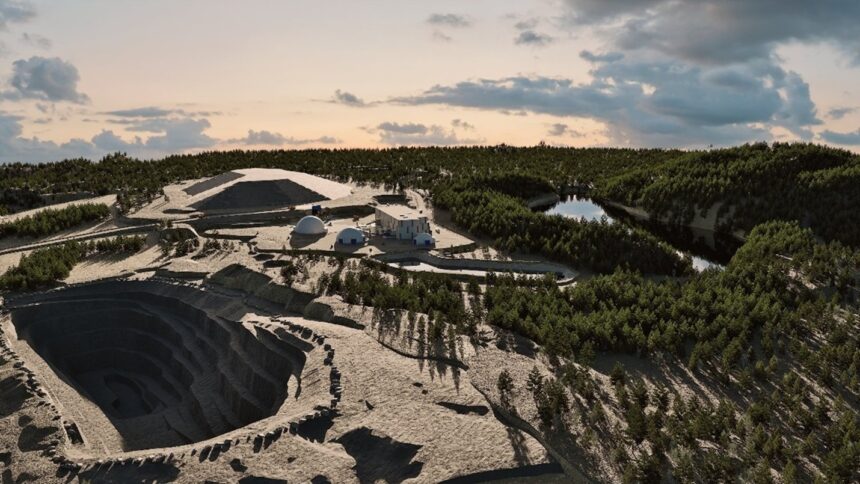
Nouveau Monde Graphite (TSX: NOU; NYSE: NMG) has obtained a Quebec mining lease granting extraction rights at its Matawinie graphite project, where construction is underway ahead of a planned production ramp-up by the end of 2028.
The project, around 120 km north of Montreal near Saint-Michel-des-Saints, is designed to produce about 106,000 tonnes of graphite concentrate annually over 25 years. Construction began in April, followed by a final investment decision in May, the company said.
“This milestone is the result of several years of dialogue and close collaboration with the Atikamekw community of Manawan, the municipality of Saint-Michel-des-Saints, and Quebec’s regulatory authorities,” founder, president and CEO Eric Desaulniers said in Monday’s lease announcement.
Matawinie is intended to supply a domestic graphite industry serving battery manufacturers and other customers. The company also plans a Bécancour plant capable of producing 13,000 tonnes of battery materials annually, although a final investment decision on that project remains pending. Matawinie would become Canada’s largest operating natural graphite mine, according to Nouveau Monde.
Shares closed 2.3% weaker at $1.27 in Toronto on Monday, reversing an earlier gain. They were at $1.26 Tuesday morning, valuing the company at nearly $415 million (US$297 million).
Construction advances
Preliminary construction began on April 13, with work progressing within budget as of the company’s second-quarter update. Construction and commissioning are expected to take about 31 months, leading to the start of the production ramp-up by the end of 2028, the company said in its August filing.
Quebec authorized Matawinie by decree in 2021, following a public review conducted in 2020 by the Bureau d’audiences publiques sur l’environnement. The mining lease was issued by the province’s Ministry of Natural Resources and Forests.
The company signed an impact and benefit agreement with the Atikamekw community of Manawan in December 2024. It provides for community participation in environmental monitoring, alongside employment, training and business opportunities, according to Nouveau Monde.
Environmental scrutiny
The project’s design includes water reuse, progressive restoration, biodiversity protection and co-disposal of tailings and waste rock, the company says.
However, community and environmental groups have questioned the effects of earlier exploration work on nearby waterways.
Stream-sediment sampling identified metal concentrations exceeding environmental protection criteria, which the groups considered
Source: www.northernminer.com — article syndicated from the publisher’s feed; all rights remain with the original publisher.