




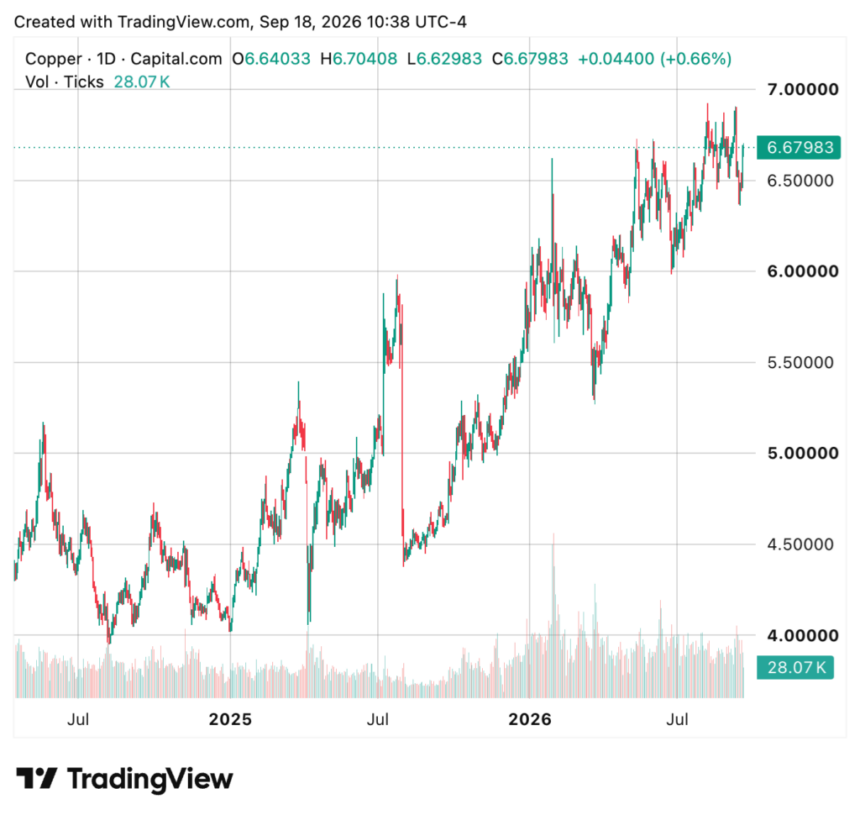
Global mined copper production could fall this year for the first time in nearly a decade even after prices hit records, as disruptions, declining grades and weak Chilean output expose how slowly miners can respond to higher prices, Sprott Asset Management says.
Mine output fell 1.1% year over year in the first half of 2026, while disruptions at Freeport-McMoRan’s (NYSE: FCX) Grasberg mine in Indonesia and Ivanhoe Mines’ (TSX: IVN; US-OTC: IVPAF) Kamoa-Kakula complex in the Democratic Republic of Congo removed an estimated 600,000 tonnes of expected 2026 production, according to a new report this week by Sprott. That is equal to about 2.5% of annual global mine supply.
“Higher prices improve project economics, but they cannot compress every stage of development or quickly replenish the discovery pipeline,” Jacob White, director of ETF product management at Sprott Asset Management, wrote in the report. Copper projects take about 17.5 years on average to move from discovery into production, he said.
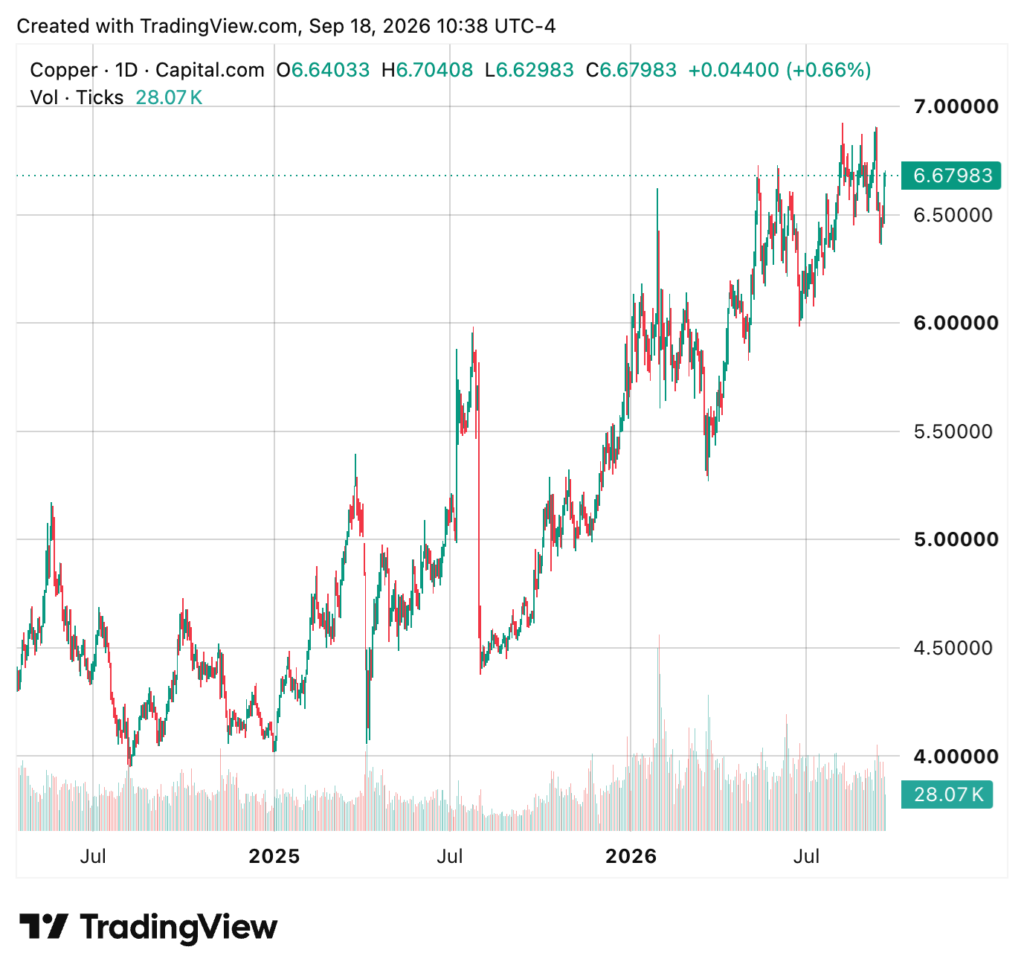
The constraint is colliding with rising demand from power grids, artificial intelligence data centres and defence, while U.S. tariff policy has shifted unusually large volumes of refined metal into American warehouses. Copper prices gained 47% in the 12 months through August, according to Toronto-based Sprott. It manages about C$77 billion ($55 billion) in assets.
Chile drags
Chile, which accounted for about 23% of world mine production last year, remains the biggest weak point. Output fell 6.6% in the first half and 9.4% year over year in July, Sprott said.
State copper commission Cochilco last month cut its 2026 production forecast to 5.27 million tonnes, 2.6% below last year, citing exceptionally low first-half output from Codelco, Escondida and Spence among other factors.
Codelco, Chile’s state miner, abandoned its 2026 production target in August following setbacks including a fatal accident at El Teniente, where development of the Andes Norte section could remain suspended for as long as two years. The El Teniente setback has added to concerns about global copper supply.
The pressure extends to private-sector producers. Antofagasta (LSE: ANTO) and Lundin Mining (TSX: LUN) cut both their 2026 forecasts in August, removing a combined 35,000 to 55,000 tonnes from expected output, according to Sprott. Lundin lowered its outlook after a second severe winter storm disrupted its Chilean operations.
Even BHP’s (ASX, LSE, NYSE: BHP) Escondida, the world’s largest copper mine, illustrates the grade problem. Despite record mining and concentrator throughput in fiscal 2026, BHP expects Escondida production to fall to 1 million-1.1 million tonnes in fiscal 2027 from 1.26 million tonnes as feed grades decline.
Copper prices rose almost sevenfold between 2000 and 2025, Sprott noted, while Chilean mine production increased only 15%, highlighting the difficulty of turning higher prices into additional tonnes.
Tariff squeeze
Mine tightness doesn’t mean the refined market is currently in deficit. International Copper Study Group data show refined production rose 2.4% in the first half while apparent use gained 2.3%, leaving a preliminary 131,000-tonne surplus, or 98,000 tonnes after adjusting for changes in Chinese bonded stocks.
But where that copper is stored has become increasingly important.
U.S. cathode imports surged to a record 223,000 tonnes in July, compared with a typical pre-2024 July range of 37,000 to 80,000 tonnes, as traders moved metal into the country ahead of possible tariffs, Sprott said. COMEX inventories rose 712% between February 2025 and August this year while inventories in London and Shanghai declined.
Expectations that U.S. President Donald Trump would impose a 50% tariff on refined copper had previously driven the COMEX price to a premium of more than 30% over London. Refined copper was ultimately excluded when tariffs were announced last year, though the U.S. Commerce Department recommended duties of 15% from January 2027 and 30% from 2028, subject to a presidential decision.
That uncertainty has continued to encourage metal to remain in the U.S., Sprott said, leaving less readily available elsewhere.
Miners surge
Tight mine supply has amplified the gains for producers.
The LME spot copper price rose 4.4% in August and 16% through the first eight months of the year, while the Nasdaq Sprott Copper Miners Index gained 17% during August and 31% year to date. Junior copper miners rose 21% in August.
Over the 12 months through August, the spot copper price gained 47% while Sprott’s copper miner and junior miner indexes each advanced about 92%.
Scarce concentrate has also pushed treatment and refining charges sharply in miners’ favour, while the long development cycle means high prices are more likely initially to encourage brownfield expansions, partnerships and acquisitions than a rapid increase in new mine supply, White said.
Only three of the world’s 10 largest copper producers are publicly traded companies focused predominantly on copper, meaning much of investors’ exposure to the metal remains embedded in diversified miners, according to Sprott.
Source: https://www.mining.com/copper-mine-supply-risks-first-decline-since-2017-sprott/