



Venezuela’s return as a potential destination for global mining investment threatens uncontacted Indigenous peoples whose survival depends on forests increasingly exposed to mineral development.
The country, which reemerged on investors’ radar following the US removal of President Nicolás Maduro in January, is rich in gold, bauxite, coltan, iron ore, nickel and other minerals sought by technology, energy and defence companies. But developing those resources could carry enormous human and environmental costs.
Some of the world’s most serious human rights abuses and environmental destruction are occurring in the Orinoco Mining Arc, Venezuela’s principal mining region. Forced labour, human trafficking and sexual exploitation flourish as Colombian armed groups, organized crime networks and Venezuelan criminal syndicates compete for control of gold deposits. Mining contaminates waterways and destroys forests amid ineffective environmental enforcement.
Indigenous peoples bear some of the gravest consequences. Communities have been displaced from traditional lands, while some Indigenous people have been forced to work at mining sites.
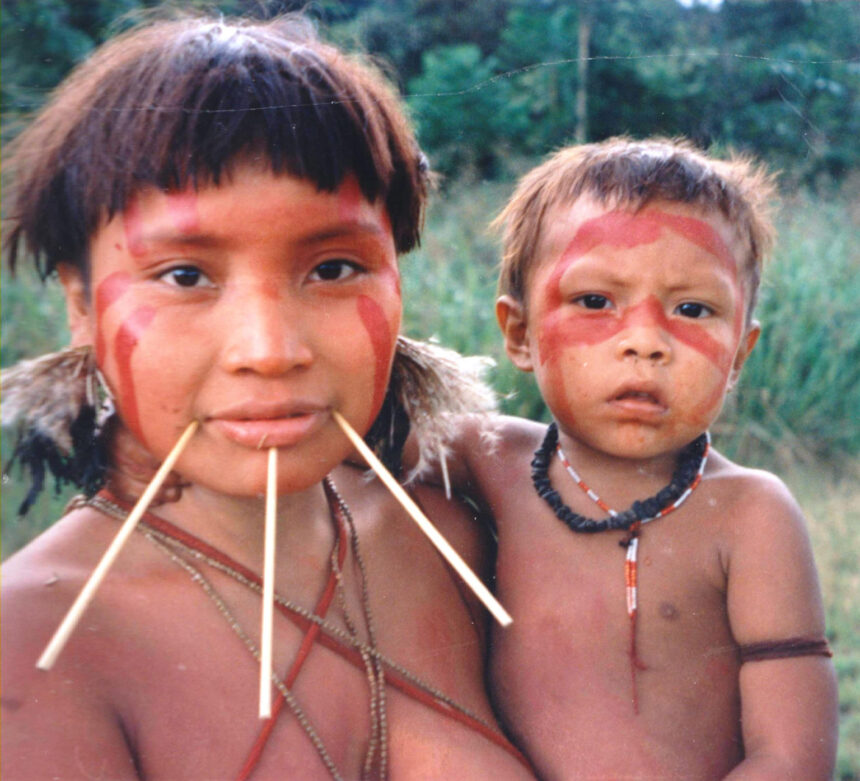
“The Yanomami and Yekuana are not poor, as has been said,” an anonymous Yanomami person told Survival International researchers. “Our wealth is not in our being able to sell land and extract gold. Our wealth is living well on our land, in our forest and having clean rivers and healthy people. We are against legalizing mining in our territory. We believe that gold should remain under the earth.”
Despite the abuses and risks, Western mining companies and financial institutions are considering the Orinoco region as the global race for critical minerals intensifies. That interest gives Venezuela an opportunity to establish credible human rights and environmental safeguards before large-scale commercial development advances.
Most urgently, the country must protect the forests of its uncontacted Indigenous peoples from an expanding mining frontier.
Deadly Contact
Survival International’s new report, Uncontacted Indigenous Peoples: At the edge of survival, identifies at least 196 uncontacted Indigenous peoples and groups in 10 countries. More than 96% face threats from extractive industries and exploration.
The communities are self-sufficient and resilient, living independently in forests where their rights are respected. About 80% are in the Amazon Basin, with others in countries including India and Indonesia.
Venezuela’s uncontacted populations belong to four Indigenous peoples: the Jödi/Hoti, Uwottüja/Piaroa, Yanomami and Eñepá/Panare. They live deep in southern Venezuela’s forests, including areas that overlap with or lie near the western Orinoco Mining Arc.
For communities that reject outside contact and depend on the forest for their existence, mining expansion is more than an environmental threat. It can be existential.
Mining brings roads, workers, equipment, settlements and other outsiders into remote territories. Such contact can prove catastrophic because isolated peoples have little or no immunity to common infectious diseases. Tuberculosis, malaria, influenza, COVID-19 and even the common cold can spread rapidly with devastating consequences.
Illegal mining has already caused severe health and humanitarian crises among Yanomami communities along the Venezuela-Brazil border in recent years, exposing people to infectious diseases, mercury contamination, violent crime and the destruction of food sources.
Preventing forced contact must therefore be treated as a fundamental human rights obligation rather than another item on a mining company’s risk assessment.
If formal commercial mining is to expand, Venezuela should first legally recognize the existence and rights of isolated peoples, identify and protect their territories, establish effective buffer zones, prohibit extractive activities within protected areas and create credible mechanisms to prevent unauthorized entry.
Western mining companies and their financial backers, potentially including the US government and international financial institutions, should be required to meet those conditions before investing. Companies considering projects in the Orinoco Mining Arc should conduct rigorous due diligence and demonstrate that concessions, infrastructure, supply chains and related activities will not encroach on protected territories or buffer zones, or encourage illegal mining and settlement nearby.
Free, Prior and Informed Consent (FPIC) from Indigenous peoples is required under international law, backed by the United Nations, for developments on their territories. Uncontacted peoples cannot provide FPIC, making mining on their territories both devastating and illegal.
Companies and financiers seeking to operate in the Orinoco Mining Arc should also follow the standards of the Initiative for Responsible Mining Assurance (IRMA), which recognizes that uncontacted peoples cannot provide consent and therefore prohibits mining on their territories.
If those protections cannot be guaranteed, responsible companies and investors should stay away.
Commercial development should not be mistaken for a solution to illegal mining. Venezuela’s governance problems, limited enforcement capacity and lack of political will mean illicit operations could continue alongside legitimate mines. New roads, supply chains and financial flows created for large projects could even make remote areas more accessible to illegal miners.
That would expose legitimate companies to their own risks. Formal operations could become entangled, directly or indirectly, with illicit gold networks, armed groups or criminals implicated in human rights abuses, extending corporate exposure beyond concession boundaries.
The danger is particularly acute near isolated Indigenous peoples. A mine may sit outside a protected territory, but the roads built to reach it can bring settlers, illegal miners and criminals closer to communities determined to remain isolated.
Venezuela’s mineral wealth will attract increasing attention as governments and companies compete for critical-mineral supplies. Under current conditions, however, responsible mining is extraordinarily difficult, if not impossible, until authorities can protect Indigenous territories, control illegal mining and enforce credible human rights and environmental safeguards.
For Venezuela’s uncontacted peoples, those protections are not abstract principles of responsible investment. They may determine whether entire communities survive.
* Keith Slack is Survival International USA’s director.
Source: https://www.mining.com/op-ed-venezuela-mining-revival-threatens-isolated-indigenous-peoples/